
Discover how organizations manage agreements throughout their lifecycle, from contract initiation and drafting to amendments, renewals and termination.

A contract is an agreement that plays an important role in business as it determines the terms of interaction between the parties. Business people enter into agreements not only with their partners but also with their suppliers, customers, contractors, employees and other business participants. So it is very important to control all these agreements in order to make the process clear and minimize risks.
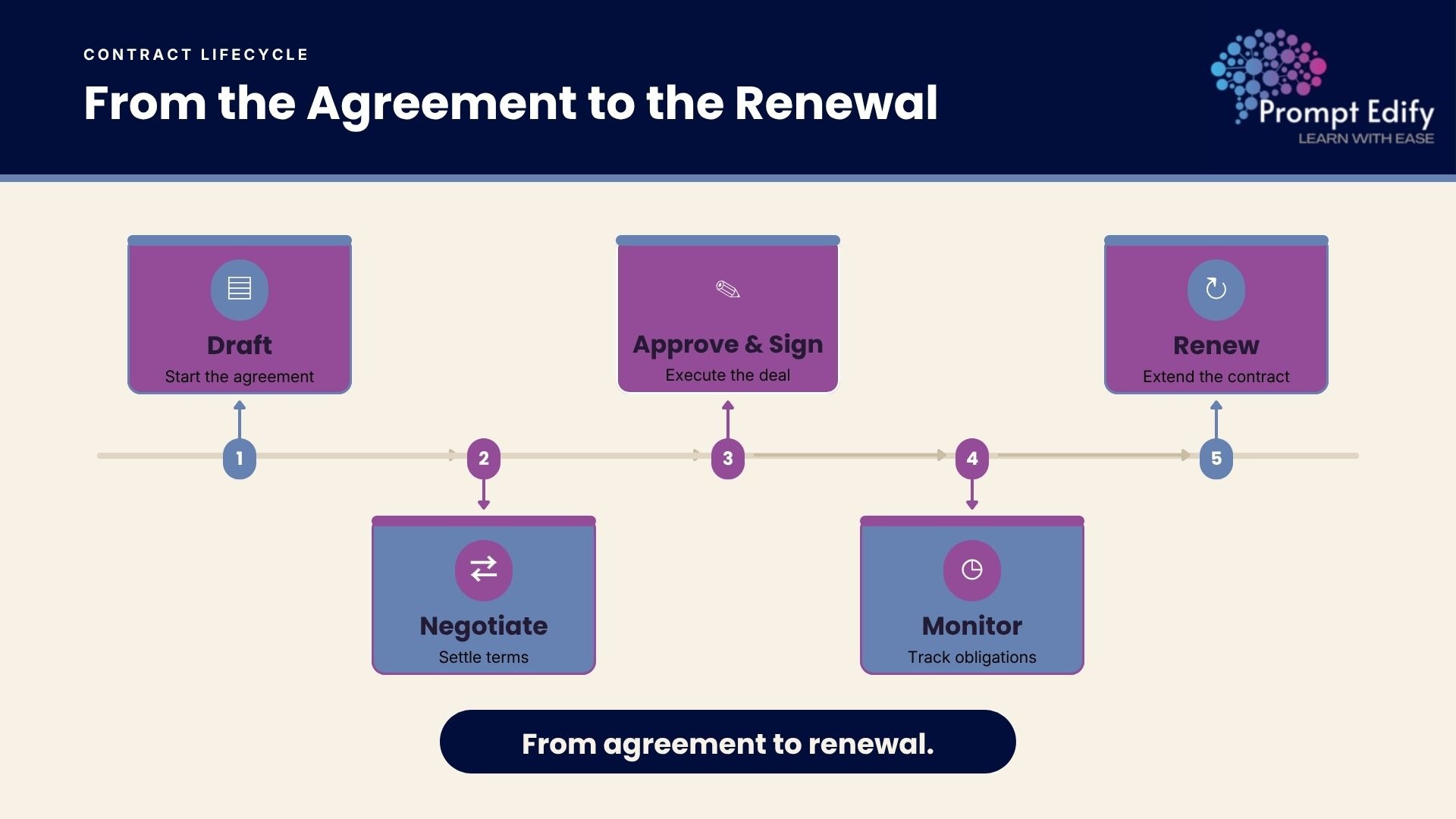
However, managing the contract is not just about drafting and signing the contract. The whole process of contract management includes its requirements, drafting, review, negotiation, signing, amendment and renewal. This process is known as the contract lifecycle.
Awareness of all these stages is very important for the proper management of the agreements.
The contract lifecycle is defined as the full course of developing, administering, controlling and closing a business deal. This process covers all operations related to contract drafting prior to signing a business contract, operation of the contract and its expiration or termination.
Having a well-established contract lifecycle management system enables companies to keep all the necessary records, manage all important deadlines, define responsibilities and avoid any contract disagreements.
Organizations can use contract lifecycle management software to store documents, facilitate the approval process, manage deadlines, etc. Yet the amount of automation provided by such software will depend on many factors.
The process starts with a situation whereby an organization sees the need to enter into a contract. Such a situation can result from having a relationship with a supplier, engaging in transactions with a client, receiving services, having a partner or conducting business operations within the organization.
At this stage, the department concerned sets out the reasons why the organization needs the contract, the parties involved, and what is expected. Key details like scope of work, cost involved, delivery and the period of the contract can also be determined at this stage.
Contract initiation is important for organizations to understand the need for a contract before embarking on preparing one.
The lifecycle of a contract starts once an entity identifies the need to have an agreement made. This may happen because of an agreement with a supplier, transaction with a client, contract for services or any other transaction.
During the initiating phase, the department concerned identifies the reason for making the agreement, the parties involved in the transaction and the terms of the agreement. Other relevant data, including the scope of work, budget estimates, delivery and duration of the agreement, may also be obtained.
A good initiating phase will help the organization to know why it needs the agreement before beginning its preparations.
The second phase after identifying the requirements of the agreement is preparing the agreement itself. The agreement involves writing a document that specifies duties, obligations, and rights of all the parties.
Contract normally has:
Following the drafting of the document, the document moves to the review stage. This stage involves reviewing the document by the stakeholders in order to verify that the terms of the agreement are valid, reasonable, and meet the organizational needs.
Legal departments may analyze the terms of the agreement, while the finance department will analyze the terms relating to payments. Other departments may be involved in this process depending on the nature of the agreement.
This stage seeks to identify problems before the signing of the agreement.
When the review process ends, the agreement is approved. The approval process is usually done in accordance with the organizational internal approval hierarchy.
For instance, a valuable supplier agreement will need to be approved by the procurement, financial and legal departments.
This process can be facilitated by contract management systems where the approval workflows are configured. Nonetheless, this will depend on the organization's approval processes and systems configuration.
This stage entails receiving consent from all the people involved in the agreement by having them sign the document. The physical signing of the document or the electronic signing of the document will depend on the organization’s needs and laws at hand.
The signed agreement forms a legally binding contract based on its effective date and conditions.
A signed copy of the agreement is crucial since it acts as evidence of the agreement and responsibilities of the team members.
Requirements and needs in the organization may change after the agreement has been entered into. Changes like pricing structure and delivery schedules may need to be altered.
Such changes are done using an amendment of the contract or through any other process of changing contracts officially recognized.
Amendments always need to be reviewed and approved according to laws.
When an agreement is about to expire, there will be a need for organizations to make a decision on whether to either renew, renegotiate or let the agreement expire.
Contract renewal can depend on the performance of the supplier, business needs, cost considerations and future operational needs.
The software can manage the renewal process of contracts through keeping track of contract dates, sending reminders and having the past agreements stored in order to initiate the process of renewal in time.
The last process is the termination of the agreement or contract closure. This can happen since the contract has expired, parties have performed their duties or when one of the parties uses their right of terminating the contract.
There is a need for organizations to check the status of any outstanding payments and deliveries, confidentiality obligations among others before terminating the agreement.
The use of contract lifecycle management software allows you to manage your contracts in one place. According to the type of software and its configuration, it will be able to provide drafting, versioning, collaboration, approvals, electronic signatures, deadlines reminders, and reporting for your contracts.
Besides facilitating access to documents and giving an understanding of their status, these tools can reduce manual work and help to make business decisions.
Nevertheless, no software can replace legal expertise, decisions, or responsibility of parties.
The contract life cycle plays an essential role in the management of contracts, beginning from the moment the need for such contracts comes up to their eventual closure. Each of these processes, including drafting, review, approval, execution, amendment, renewal, and termination, will play a role in the management of contracts.
With good processes and technology in place, it becomes easier for companies to gain better visibility of their contracts, increase accountability and manage them properly.
Learn more about enterprise software by joining Prompt Edify. Benefit from professional training programs aimed at imparting practical skills regarding SAP software and enterprise technologies.
By Team Prompt Edify
Have any enquiry? Call us
+(27) 740294414
(+91) 99932-86938
wecare@promptedify.com


Prompt Edify Africa (PTY) Limited
2nd Floor, Rivonia VillageCnr Mutual Road and Rivonia Boulevard Rivonia Village, 2191
Johannesburg , South Africa
Contact : +27740294414
Prompt Edify East Africa Limited
KN 78 ST, Kagarama, Kigali, Kigali, Nyarugenge, Umujyi wa Kigali, Rwanda
Contact : +250 727 845 771
Prompt Edify Private Limited
4th Floor #15, City Vista Tower, Fountain Road,
Kharadi, Pune(MH), India.
PIN- 411014
Contact : (+91) 99932 86938



Contact Us Today!
+27740294414 | (+91) 99932 86938 | +250 727 845 771
contact@promptedify.com | wecare@promptedify.com
🌐 https://promptedify.co.za/