
Discover SAP Demand Planning Training modules, forecasting topics, demand drivers, SAP IBP content, and skills to advance your supply chain career for planners.

In order to manage their inventory levels and run efficiently by keeping low costs and satisfying consumers' needs, organizations need accurate forecasts of demand. With the increase in complexity of the supply chain, the need for professionals who have comprehensive knowledge on demand planning and experience of working with SAP planning solutions has increased. Therefore, SAP Demand Planning Training has become increasingly important for supply chain professionals, SAP consultants, and people interested in pursuing careers in the field of supply chain.
Good SAP Demand Planning Training allows participants to study basic ideas of demand planning, different demand planning methodologies, factors influencing demand planning, and SAP IBP (Integrated Business Planning). But what can you expect from SAP Demand Planning Training, and which modules and topics should you include in your training program?
The SAP Demand Planning Training course is a training course that aims to teach people about analyzing historical demand, forecasting, and making business planning decisions through SAP software solutions.
It involves theory and application aspects of demand forecasting, inventory planning, and supply chain collaboration.
An effective training course will ensure that learners get to know how companies forecast their future demand through SAP planning solutions.
Prior to taking any course, it is crucial for one to understand the SAP Demand Planning Training Curriculum. Below are some of the most important courses that should be included in such a curriculum.
This course deals with introducing the basics of demand planning.
Some of the common topics under this course are:
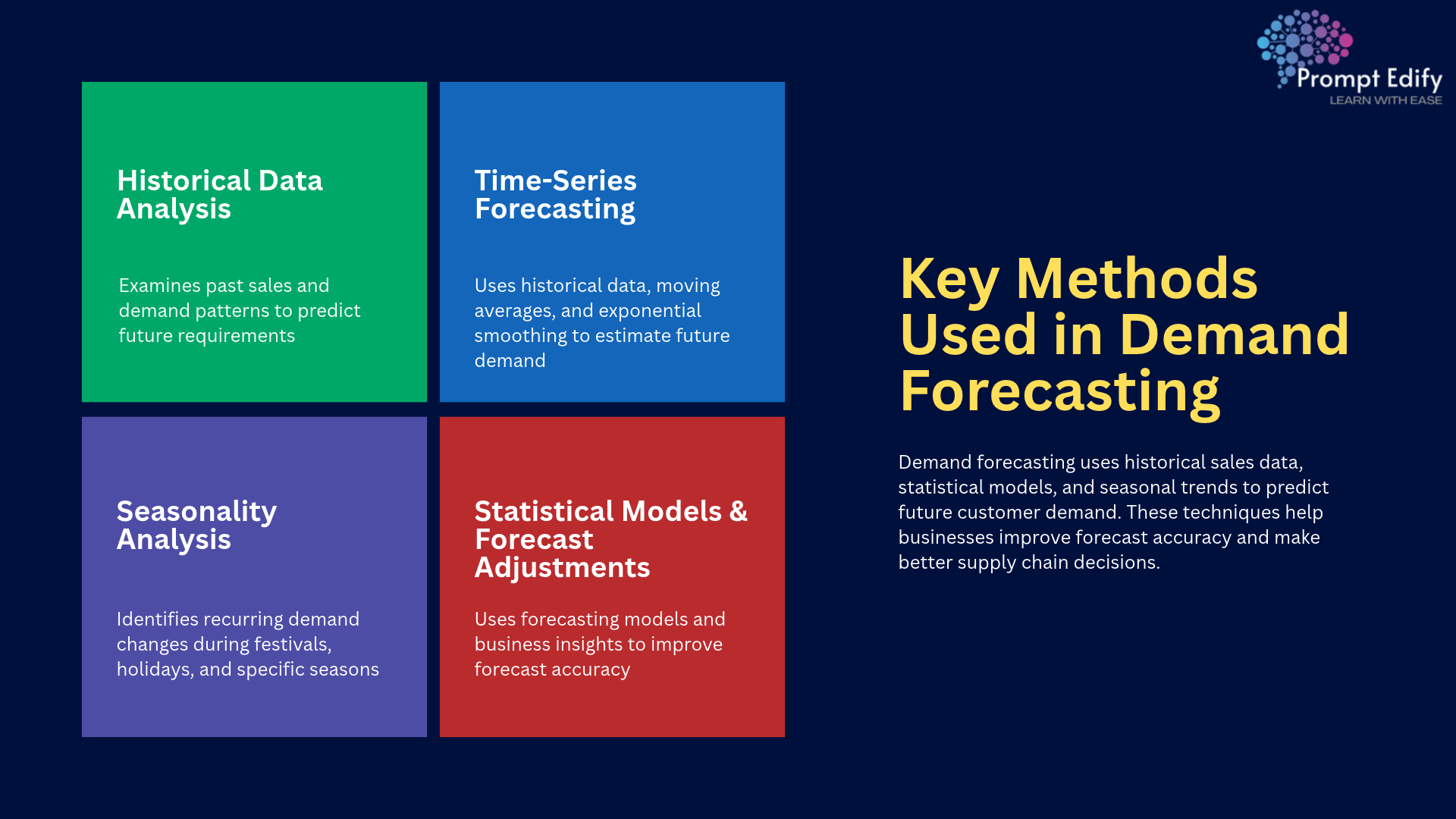
The forecasting of demand for a product is perhaps the most important topic in the SAP Demand Planning module. This topic explains how demand for a product can be predicted in the future using historical information and statistics.
Critical topics for demand forecasting include:
The demand drivers refer to those factors that affect customer demands either internally or externally. The understanding of demand drivers enables organizations to forecast future demands.
Topics for the current module should include:
These topics will enable learners to know how actual demand can be different from statistical forecasts.
The production of forecasts alone is not sufficient. Business firms need to gauge the effectiveness of their forecasts in predicting future demands.
This module concentrates on forecasting effectiveness and measuring it.
Some of the key areas of focus under this module include:
The understanding of such measures assists learners in making good forecasting decisions.
Collaborative Demand Planning involves the coordination between various functions within the business firm for successful demand planning.
This module will help learners understand how business firms integrate statistical forecasting results and business intelligence to create a collaborative demand plan.
Demand management must be integrated with the supply management process for organizational readiness to meet customer demands.
The following are the subjects that have been covered under this module:
These subjects will help learners understand the influence of demand forecasting on decision-making.
SAP Integrated Business Planning (SAP IBP) is a cloud-based software solution used for integrated supply chain planning. While going through the syllabus of SAP IBP course, make sure that it gives you practical insight into SAP IBP.
The important areas where solutions are offered include:
The modules will vary according to the training and level of the course.
On completion of a SAP Demand Planning Training course, you will be able to:
These learning outcomes will allow learners to prepare for positions such as SAP IBP Consultant, Demand Planner, Supply Chain Analyst, and Supply Chain Planning Consultant depending on their practical experience and skills.
It is important to examine the curriculum of the SAP demand planning training before choosing the training provider. It should cover demand planning basics, forecasting methods, SAP IBP features, practical exercises, and business cases.
Moreover, it is necessary to pay attention to the industry experience of the trainer, hands-on training opportunities, the duration of the course, and other types of learning support. Such training will combine theoretical and practical SAP skills.
SAP Demand Planning Training provides an understanding of how companies forecast demands, study market conditions, calculate the level of forecasting accuracy, and balance supply with customer demand.
The perfect SAP Demand Planning training syllabus must consist of forecasting, demand drivers, collaboration, demand-supply balancing, and SAP IBP modules.
The correct selection of the training program will allow you to gain important knowledge about supply chain planning and develop the necessary skills for building a successful career in SAP.
Would you like to build a successful career in SAP Demand Planning and SAP IBP? Contact us at Prompt Edify now!
By Team Prompt Edify
Have any enquiry? Call us
+(27) 740294414
(+91) 99932-86938
wecare@promptedify.com


Prompt Edify Africa (PTY) Limited
2nd Floor, Rivonia VillageCnr Mutual Road and Rivonia Boulevard Rivonia Village, 2191
Johannesburg , South Africa
Contact : +27740294414
Prompt Edify East Africa Limited
KN 78 ST, Kagarama, Kigali, Kigali, Nyarugenge, Umujyi wa Kigali, Rwanda
Contact : +250 727 845 771
Prompt Edify Private Limited
4th Floor #15, City Vista Tower, Fountain Road,
Kharadi, Pune(MH), India.
PIN- 411014
Contact : (+91) 99932 86938



Contact Us Today!
+27740294414 | (+91) 99932 86938 | +250 727 845 771
contact@promptedify.com | wecare@promptedify.com
🌐 https://promptedify.co.za/