
Discover the SAP Digital Manufacturing Training syllabus, key modules, hands-on skills, and learning outcomes to prepare for modern manufacturing roles.
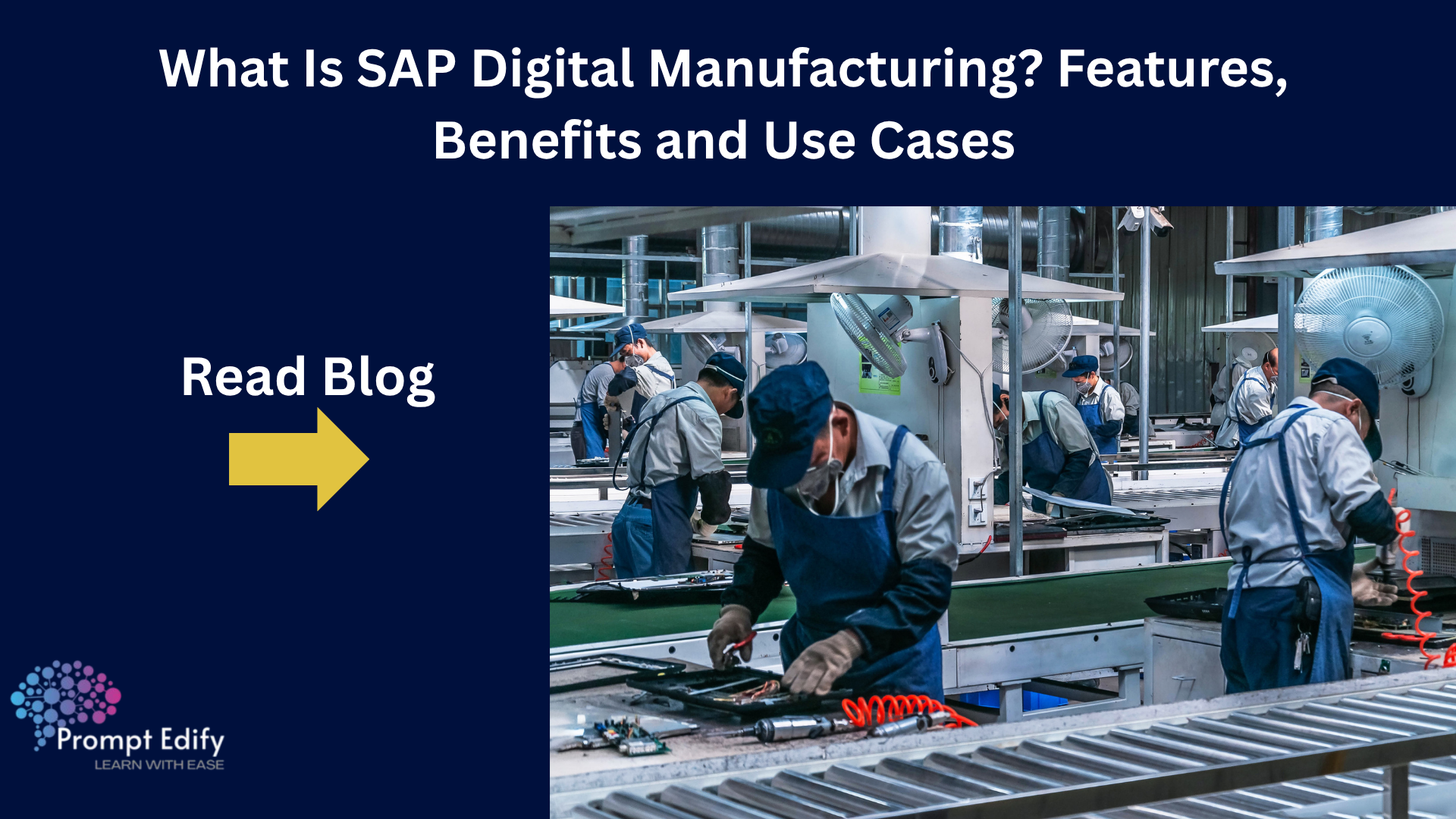
Manufacturing firms are reaching out for new levels of productivity with digital. They use digital technologies to track shop-floor activities, optimize production and make accurate data-based decisions. SAP Digital Manufacturing enables all of these to happen through the integration of manufacturing processes, equipment and enterprise systems.
If you are a professional wanting to pursue a career in smart manufacturing, then selecting the right SAP Digital Manufacturing Training would be a prudent decision. With so many training courses on SAP Digital Manufacturing, it is important to know what is included in the course curriculum. Manufacturing basics, production execution and system integration are part of most courses.
Learn the key SAP Digital Manufacturing course modules, training topics and skills to look for - and what to avoid.
Courses on SAP Digital Manufacturing must include both theoretical education and system experience. Students must learn about how digital manufacturing solutions improve production planning, execution, monitoring, and performance.
A nice to have for the program would be an overview of the SAP Digital Manufacturing environment, clarification of its key components, and an explanation of how the shopfloor activities are handled.
For beginners, the course should begin with the introductory topics of manufacturing and later move to configuration, integration and advanced manufacturing scenarios.
The first section of the SAP Digital Manufacturing course content should introduce digital manufacturing concepts and system architecture.
Important topics include:
Learners should understand how SAP Digital Manufacturing connects enterprise-level business processes with shop-floor operations.
Master data contains the data that underpins your manufacturing operations. This area provides an overview of how production data is stored and applied.
SAP Digital Manufacturing Training topics are:
By knowing the master data, students will learn that correct data allows efficient production execution.
Production execution is a very important area of digital manufacturing. It is all about managing and tracking manufacturing orders through the production process.
Learners need to investigate:
The module introduces learners to how production is recorded and track digitally rather than having to do everything manually.
The manufacturing processes will be performed online via the point of presence (POD) by operators.
Explain how the curriculum will demonstrate the relationship of production, work instructions and operations and the opportunities for operators to make use of the dashboard.
Key considerations:
Candidates should be able to identify ways in which they can demonstrate their knowledge by: showing, for example, how the dashboard could provide real examples of the standards expected of individual operators on the normal shop floor.
In manufacturing data collection businesses can gain visibility into shop floor activities. This module is specifically aimed at collecting production information, and then using this data to track performance.
Topics to look for include:
The way in which live production data provides management with the ability to spot bottlenecks, track performance and optimize the manufacturing process.
It is simply the art and science of manufacturing resources control and co-ordination to facilitate manufacturing.
It is intended to offer insights into how the systems combine manufacturing resources and promote the most suitable manufacturing processes on the shop floor.
SAP Digital Manufacturing is used in conjunction with enterprise systems like SAP S/4HANA. It is vital for manufacturing professionals to familiarize themselves with the use of sap digital manufacturing.
A well-structured syllabus should encompass the following:
Learners should also understand how the data from the enterprise supports manufacturing execution and how production information can be shared between connected systems.
Quality management and traceability must be ensured in order to protect manufacturing standards and industry standards.
It also helps students to understand how the equipment and the items can be monitored for quality, to identify if there is an issue, and also to monitor the journey of the entire process from start to finish.
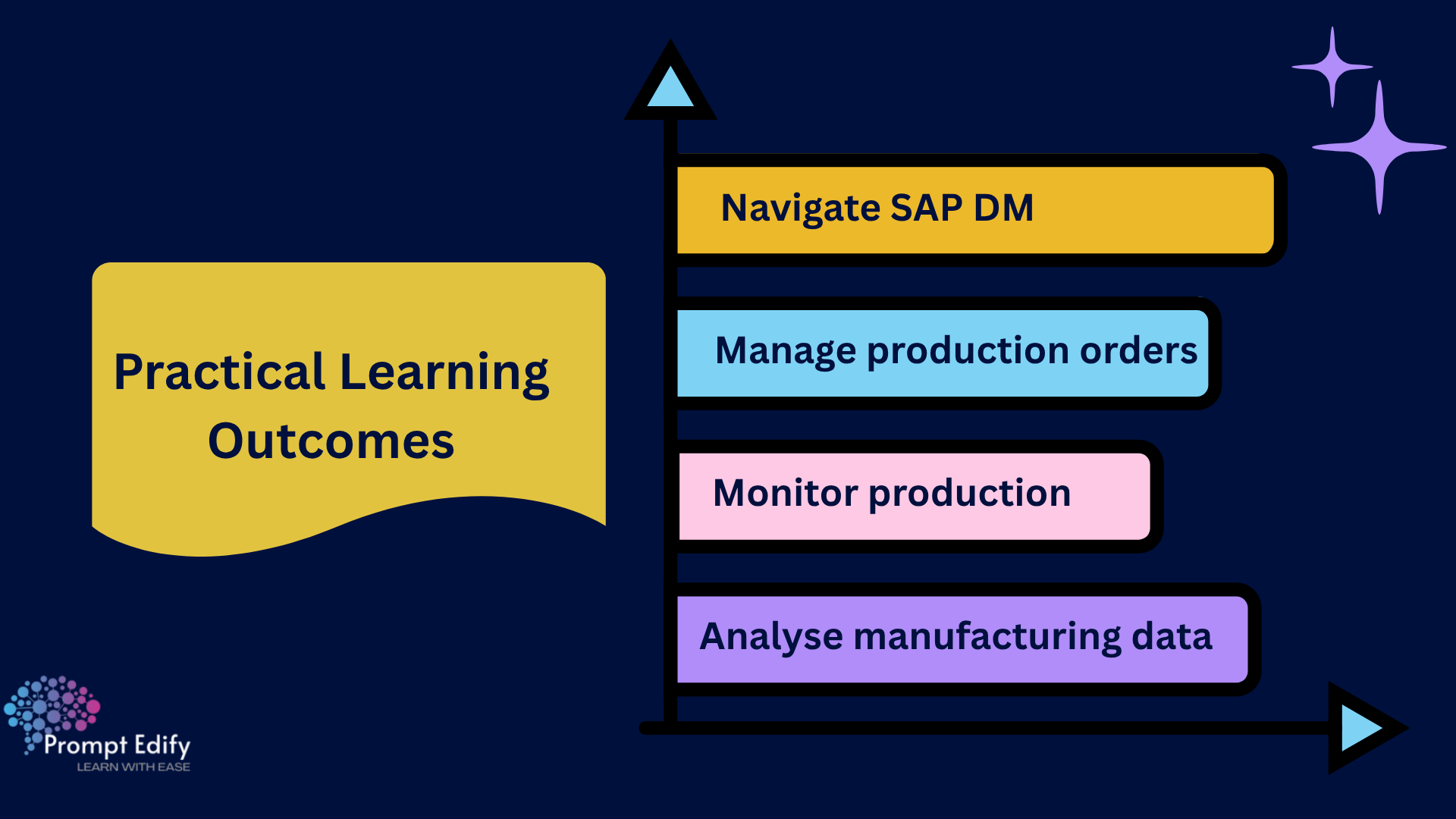
Theory won't get you all the way there for SAP Digital Manufacturing. Seek out a program that can give you hands-on practice and real-world manufacturing examples.
By having SAP Digital Manufacturing hands-on training you should be able to:
Prior to registering, examine the SAP Digital Manufacturing course agenda to see if the topics are relevant to your career objectives.
Look at the curriculum - a good course should show evolution from fundamentals to manufacturing scenarios. It should describe not only what each feature is, but why it is needed in a manufacturing environment.
Selecting the best training institute can be a game-changer in your SAP learning process. At Prompt Edify, we emphasize on industry oriented training which can enable learners to understand SAP technologies and their usage.
Through a structured learning journey, mentoring by leading professionals and hands-on experience, Prompt Edify is looking to equip students and working professionals with the necessary SAP skills.
Considering entering the digital manufacturing industry or are you someone who would like to improve your current SAP skills? Visit us at Prompt Edify for information regarding the SAP Digital Manufacturing Training.
A good SAP Digital Manufacturing syllabus should prepare users on the basics of the platform navigation. It should go beyond the basics to explore the basics of manufacturing, master data, production execution, POD, resource orchestration, system integration, quality and analytics.
When researching various training programs, look for practical information, real-world situations, and a defined learning path. Obtain the right SAP Digital Manufacturing Training to build the foundation you need for a role in the intelligent manufacturing and digital transformation journey.
By Team Prompt Edify
Have any enquiry? Call us
+(27) 740294414
(+91) 99932-86938
wecare@promptedify.com


Prompt Edify Africa (PTY) Limited
2nd Floor, Rivonia VillageCnr Mutual Road and Rivonia Boulevard Rivonia Village, 2191
Johannesburg , South Africa
Contact : +27740294414
Prompt Edify East Africa Limited
KN 78 ST, Kagarama, Kigali, Kigali, Nyarugenge, Umujyi wa Kigali, Rwanda
Contact : +250 727 845 771
Prompt Edify Private Limited
4th Floor #15, City Vista Tower, Fountain Road,
Kharadi, Pune(MH), India.
PIN- 411014
Contact : (+91) 99932 86938



Contact Us Today!
+27740294414 | (+91) 99932 86938 | +250 727 845 771
contact@promptedify.com | wecare@promptedify.com
🌐 https://promptedify.co.za/