
Implement SAP DRC smoothly with our complete 7-step guide covering configuration, system integration, country compliance, testing, and post-go-live best practices.
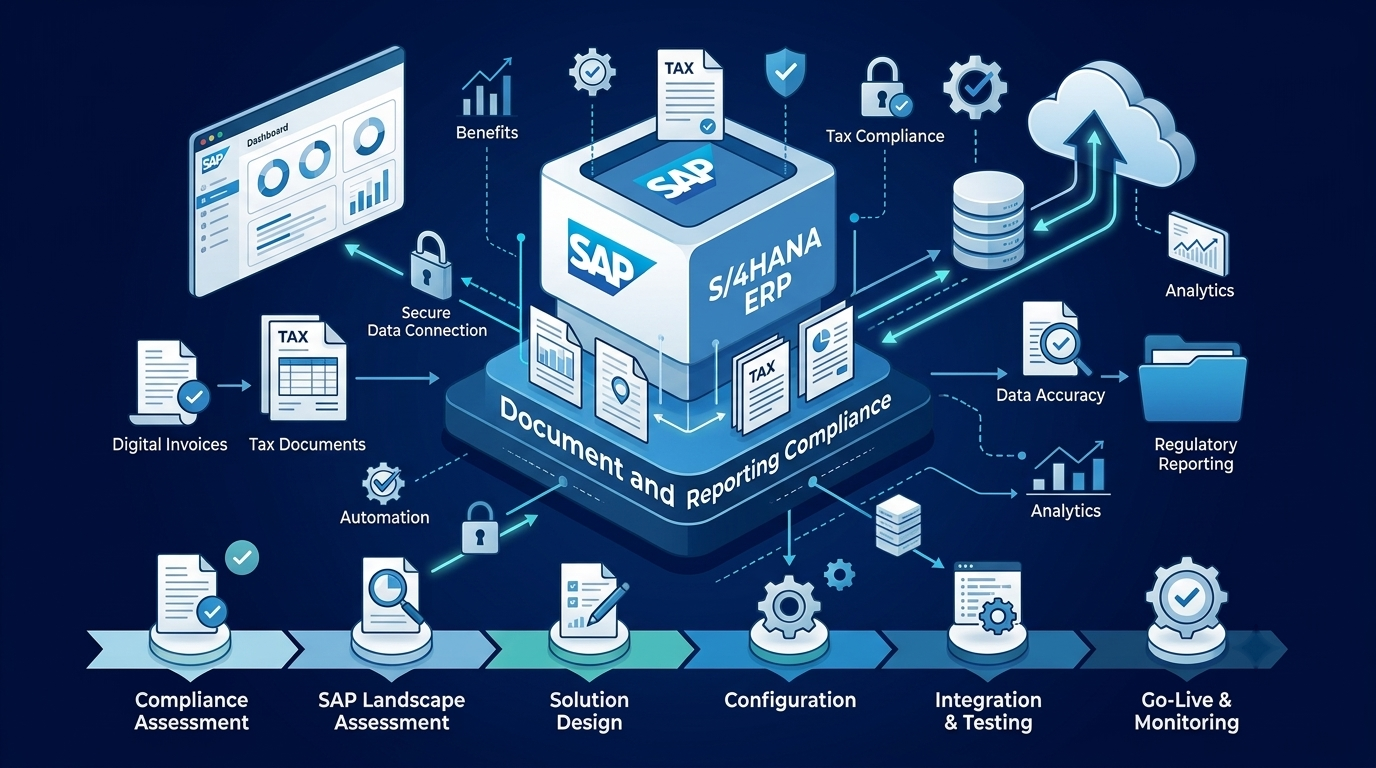
As international businesses increasingly look for better ways to handle electronic invoices, compliance reporting, tax documents, and various local regulations in different jurisdictions, the SAP Document and Reporting Compliance solution is available to help companies ensure compliance in the SAP environment.
However, simply deploying SAP DRC is not enough to ensure successful implementation and help organizations utilize the solution optimally. In order to make the most of SAP Document and Reporting Compliance, organizations have to evaluate their SAP system, find out the local requirements, implement the necessary compliance measures, make the required system integrations, test the electronic documentation, and train their employees.
This guide will help readers understand how SAP DRC is implemented and give tips on how to configure the solution.
The SAP Document and Reporting Compliance service (SAP DRC) is an SAP service meant to allow companies to manage their electronic documents, as well as regulatory reporting in compliance to the applicable requirements in different countries.
The support that DRC can provide varies depending on the region where SAP operates and compliance needs – DRC can handle processes related to electronic invoicing, regulatory reporting of necessary documents, tax document handling, and electronic communication with governments.
In case a company operates in several regions of the world, DRC makes it possible to deliver a systematic approach to regulating compliance needs on a wider scope of issues within the SAP system.
The functionalities of DRC, documents for outcome, and level of integration depend on the requirements imposed by the country, SAP version and model of deployment.
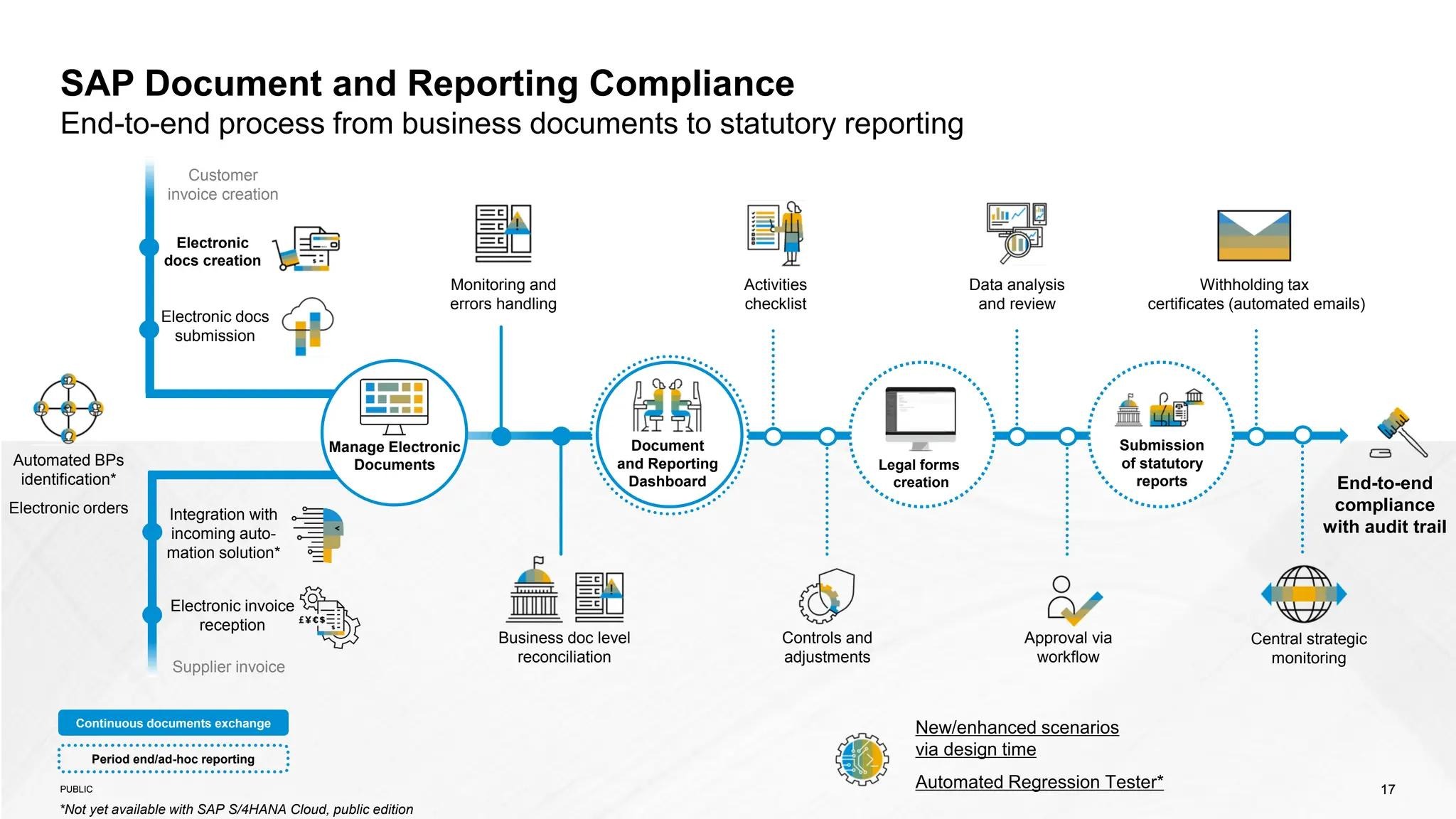


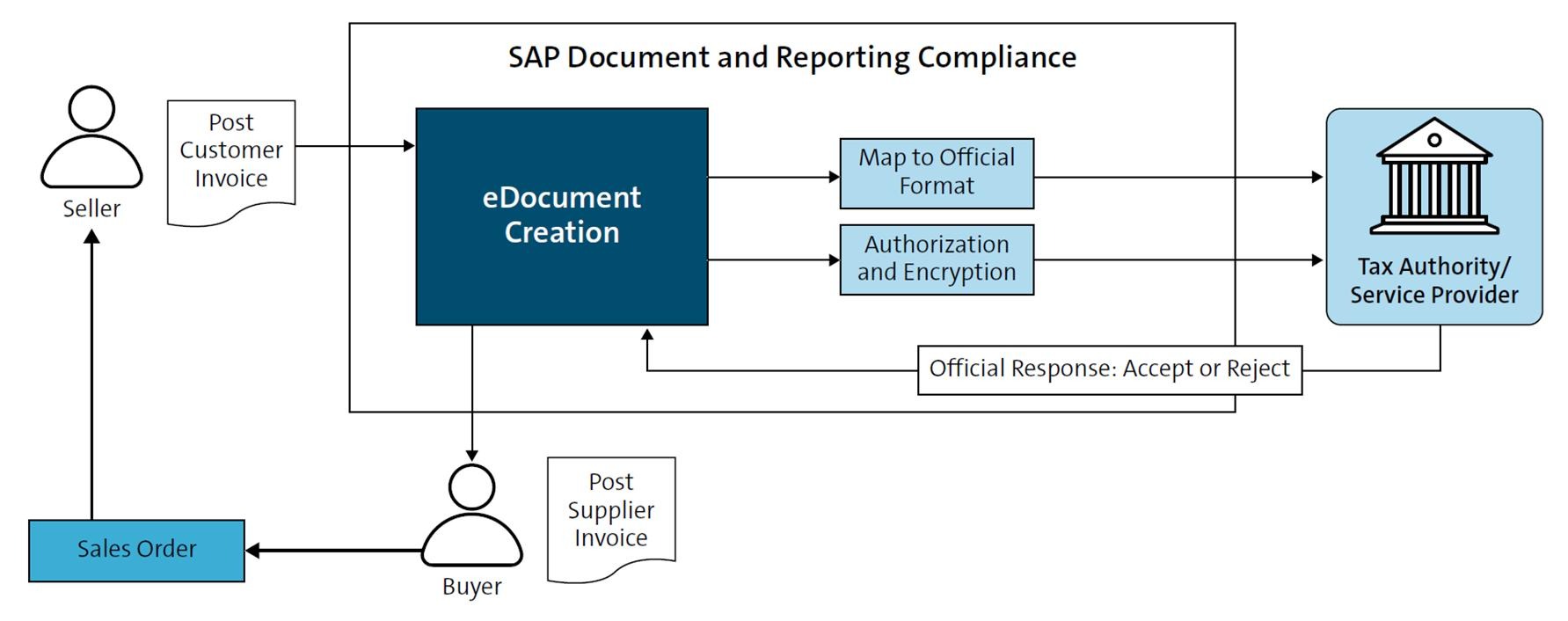

A successful implementation of SAP DRC can unite relevant compliance processes with existing SAP workflows and business data. Rather than using different systems for electronic invoicing and statutory reporting, providing a proper way of dealing with compliance processes can be much more beneficial for organizations.
One of the success factors is that the process should begin with business and legal demands rather than only technical configuration.
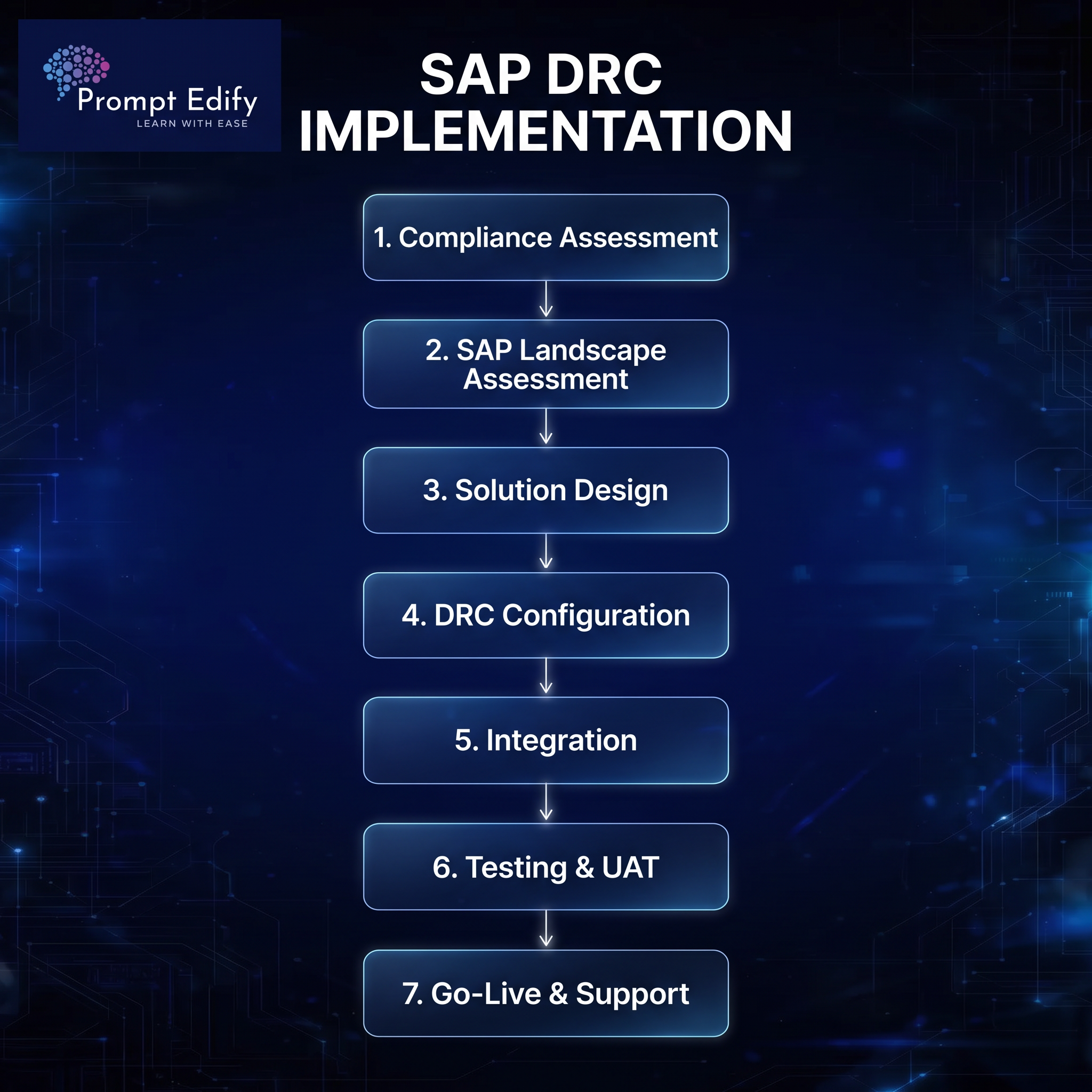
The first thing you need to do is to determine the compliance requirements of your organization. The necessary compliance evaluation includes:
This knowledge allows determining the scope of the project prior to configuration.
Following this, the implementation team ought to evaluate the current SAP environment which encompasses:
This is to ascertain how DRC fits within the current architecture.
The goal is to generate an architecture that supports business processes and regulatory obligations.
SAP DRC configuration means establishing compliant practices consistent with the pre-approved design of the solution.
This configuration may consist of country-specific configurations, types of documents, tax information, reporting parameters, company codes, business partners, rules for document handling, and processes of submission.
Configurations must always be in compliance with the proven requirements of the regulations and capabilities present in the organization's SAP application.
SAP DRC integration attaches SAP operations to the relevant document or reporting process.
The simplified process is:
SAP ERP / SAP S/4HANA → SAP DRC → Electronic Document Processing → Authority or Platform in charge → Response or Status
When planning an integration, it is necessary to take into account aspects such as data interchange, authentication, document transmission, responding to responses, managing mistakes, monitoring, validation, and security.
In the case of international companies, companies' integration systems should be designed taking into account the differences in the jurisdictions rather than supposing that one system would work.
The testing process is very important because it involves validation of both success and failure situations when implementing compliance procedures.
Testing can involve steps such as:
Testing should also include validation of rejected documents, unprovided information, invalid data and unsuccessful submissions.
After the user acceptance phase and successful testing, the solution can be migrated to production with the go-live activities consisting of final configurations, readiness of users, planning the cutover process, checking the production process and debugging the issues.
Support after go-live is also extremely important since tax legislation and reporting requirements may change after the implementation process.
SAP DRC configuration is one component of a complete implementation.
Configuration
Implementation
Focuses on system settings
Covers the complete deployment
Configures compliance parameters
Begins with business requirements
Defines document settings
Includes solution design
Includes country-specific configuration
Includes integration and testing
Supports technical setup
Includes go-live and support
A complete SAP Document and Reporting Compliance implementation can therefore include assessment, design, configuration, integration, testing, deployment and ongoing support.
Companies that have implemented SAP S/4HANA must take into account their deployment model and their compliance requirements when planning DRC.
In particular, companies using SAP S/4HANA Cloud should take into consideration available compliance options, integration possibilities as well as country regulations concerning DRC.
SAP S/4HANA Cloud Private Edition might have various architecture and integration factors which should be consistent with the current IT infrastructure of the company.
Implementation of DRC in SAP S/4HANA On-Premise might require evaluation of existing customization, legacy systems and integrations.
In all cases it is important to take into account the SAP version and the deployment type as well as the countries of operation and compliance factors.
Tax authorities and electronic reporting structures vary in the various countries of Africa. In that light, it will be necessary for companies implementing SAP DRC to follow a country-specific approach when using this type of technology.
The SAP DRC system is built to meet specific country requirements instead of taking a standard approach. Depending on the tax removal status of any given organization, there are certain capabilities within SAP that can be used to focus on electronic submission of invoices, reporting, and creating official paperwork for the tax agencies.
For example, companies in Kenya have to check the requirements stipulated by KRA eTIMS, while in South Africa, firms are also supposed to stay up to date with the latest SARS digital reporting news. At the same time, the situation in other countries such as Nigeria, Egypt, Zambia, and Morocco needs to be regarded in such a way that those companies understand the particularities of their taxation systems.
What is more, there is really no single approach towards implementing DRC due to various jurisdictions and the systems of SAP being used. Therefore, it is recommended that companies consider every market from the angle of its own specifics while making
Companies can evaluate SAP DRC according to the relevant South African tax, legal and electronic documents requirements. The evaluation should take into account the SAP ecosystem, reporting procedures, integration processes and legislative trends.
Kenyatta companies should take into account the requirements of the Kenya Revenue Authority eTIMS specifications when setting up electronic invoicing and tax compliance. The evaluation may involve the consideration of SAP invoicing processes, document verification technology, integration and monitoring.
Companies in Nigeria, Egypt, and Morocco must evaluate their electronic invoicing, tax reporting, and legal needs, and how they will be addressed using SAP solutions.
Any issues that may occur during implementation include:
Tax authorities often modify requirements for electronic invoicing and reporting.
Different jurisdictions will dictate different needs in terms of formats, validation and integration.
Existing adaptations can complicate implementation.
External entities require certain data sets and authentication procedures.
Errors in master data and transactions will impact compliance documents.
Compliance scenarios require extensive functional and end-to-end testing.
Finance, tax, and IT departments must get accustomed to new processes and exception management.
Changing regulations will require constant adjustments and modifications.
A successful SAP DRC program can help organizations:
There is no common implementation period. The time required depends on the number of jurisdictions, companies, the SAP version, and deployment type.
A solo-country project may differ significantly from a multi-country one involving different entities and complicated integrations.
The costs vary depending on the scope and level of complexity of the project. Some important factors to consider include:
When it comes to calculating costs it’s better to utilize scope assessment instead of estimating the costs based on general implementation fees.
When selecting a partner for SAP DRC implementation, companies should look for:
The right partner must be capable of combining business requirements, SAP technology, and compliance requirements into one implementation process.
Prompt Edify offers organizations the right support in evaluating and addressing their obligations under SAP Document and Reporting Compliance in various African regions.
Our services include:
For organizations that work in several regions of Africa, Prompt Edify can help to offer a uniform approach to compliance with SAP regulations while taking into account specific requirements that are necessary in each region.
The following practices can help organizations achieve successful implementations:
It is essential to first grasp regulatory requirements and compliance policies in order to carry out technical implementation smoothly.
Determine relevant information for a specific country, such as tax authority and compliance requirements.
Because DRC implementation affects many departments, stakeholders from financial, tax, and IT departments should participate in the process of defining requirements for implementations.
Test all possible scenarios, including typical transactions and cases where documents are rejected or information is missing.
Integrate monitoring and change management systems into the compliance operating mode in order to remain compliant at all times.
What is SAP DRC implementation?
It is a process that starts with an assessment and ends with the implementation of SAP Document and Reporting Compliance in compliance with industry needs and regulations.
Does SAP DRC support electronic invoicing?
SAP DRC provides support for relevant electronic invoicing and electronic document scenarios depending on the country of compliance, legislation, and capabilities of SAP.
Can SAP DRC support multiple countries?
Yes, SAP DRC will support different compliance scenarios based on different countries but organizations must assess each case separately as the requirements can differ.
How does SAP DRC work with SAP S/4HANA?
SAP DRC can enable electronic documents and reporting steps for SAP S/4HANA businesses. The implementation process will vary according to the deployment type, compliance scenario, and country in question.
How can a business prepare for SAP DRC implementation?
First, businesses must pinpoint the nations in which they provide services and are thus liable to observe compliance. Next, they should analyze the SAP tool used, documentation process, existing implementations, and reporting strategy. After this analysis, they will be able to know the scope of implementation of SAP DRC.
SAP DRC implementation can help organizations create more structured processes for electronic documents, tax reporting, and regulatory compliance within their SAP environment.
Successful implementation requires more than configuration. Businesses need to assess their regulatory obligations, SAP landscape, and integration requirements, followed by solution design, configuration, testing, and ongoing compliance management.
For organizations operating across Africa, a country-specific approach is especially important because tax and electronic reporting requirements vary between jurisdictions.
If your organization is preparing for electronic invoicing, statutory reporting or broader SAP compliance requirements, a structured DRC assessment can help identify the appropriate implementation approach.
Prompt Edify supports organizations with SAP DRC assessment, configuration, integration, testing, and ongoing compliance support across African markets.
Talk to an SAP DRC Expert to discuss your SAP environment and compliance requirements.
By Team Prompt Edify
Have any enquiry? Call us
+(27) 740294414
(+91) 99932-86938
wecare@promptedify.com


Prompt Edify Africa (PTY) Limited
2nd Floor, Rivonia VillageCnr Mutual Road and Rivonia Boulevard Rivonia Village, 2191
Johannesburg , South Africa
Contact : +27740294414
Prompt Edify East Africa Limited
KN 78 ST, Kagarama, Kigali, Kigali, Nyarugenge, Umujyi wa Kigali, Rwanda
Contact : +250 727 845 771
Prompt Edify Private Limited
4th Floor #15, City Vista Tower, Fountain Road,
Kharadi, Pune(MH), India.
PIN- 411014
Contact : (+91) 99932 86938



Contact Us Today!
+27740294414 | (+91) 99932 86938 | +250 727 845 771
contact@promptedify.com | wecare@promptedify.com
🌐 https://promptedify.co.za/