
Learn SAP EWM implementation steps: warehouse planning, configuration, integration, testing, user training, deployment and ongoing support for a smooth go-live.
The SAP Extended Warehouse Management (EWM) software is a warehousing management system that allows organizations to better manage and control their warehousing activities, including receipt of goods, put-away, picking, packing, goods issue and inventory management.
SAP EWM implementation refers to the process of planning, configuring and integration of SAP EWM that is aimed at fulfilling the organizational warehousing management needs. The process of SAP EWM implementation includes such aspects as the creation of warehousing structures, definition of business processes, preparation of master data and the integration of EWM into other SAP systems.
The first step when implementing SAP EWM is the evaluation of the warehouse requirements of the organization and its process map.
It is very crucial to evaluate how the warehouse works before installing the technical infrastructure for EWM.
The below are some of the processes that take place in this process:
Process mapping helps the organization to clearly define the implementation scope.
Once the requirements are identified, the next stage involves preparation of the warehouse structure and master data.
The SAP EWM application has several organizational elements which can be used to describe the warehouse and storage structures.
The main elements of warehouse structure are as follows:
Preparation of master data is equally important. This involves updating of master data of products, business partners, packaging, and warehouse master data.
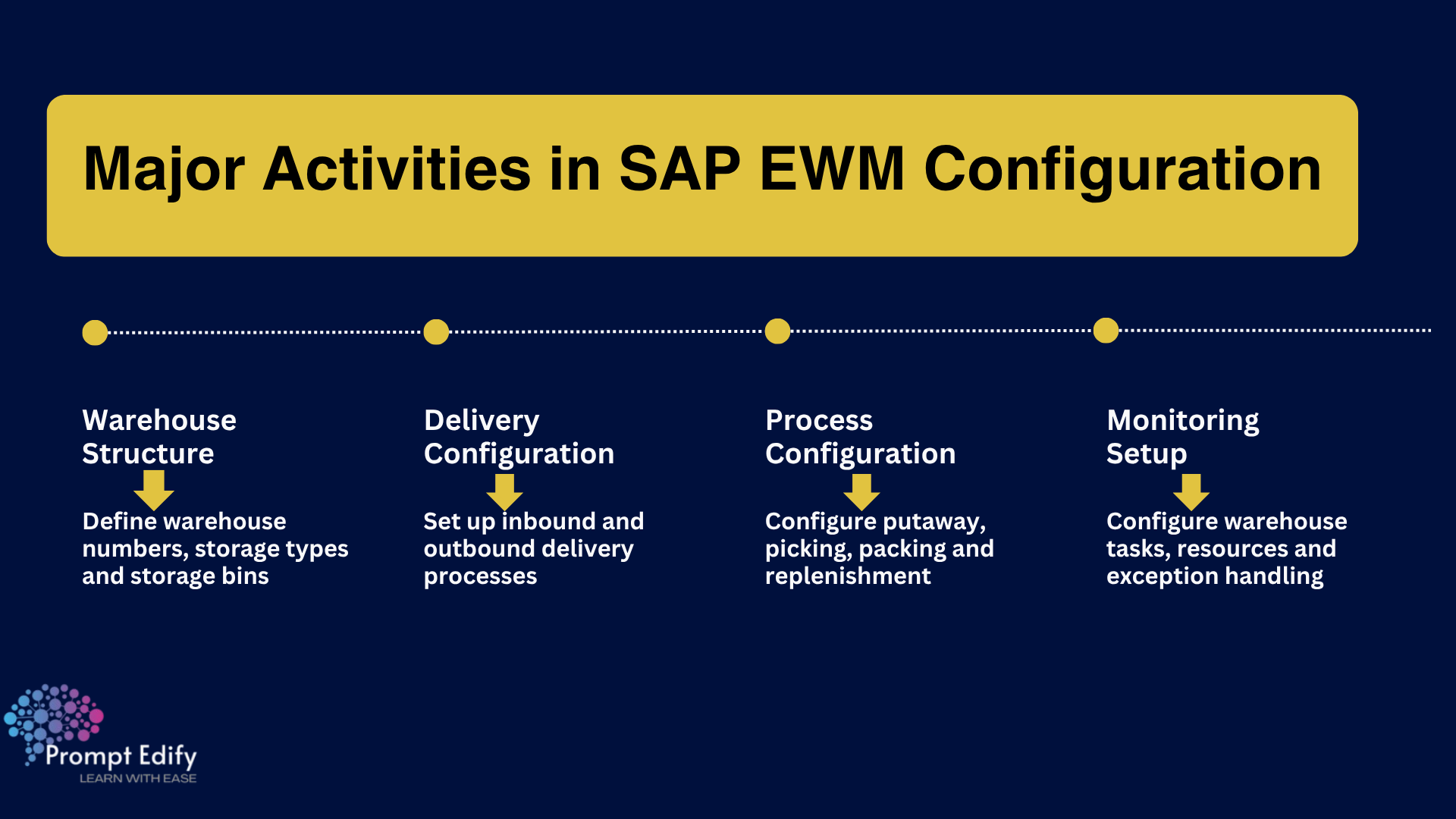
SAP EWM customization is one of the crucial steps during implementation. It consists of making adjustments to the system based on the needs of the warehouse in an organization.
Some of the key configuration activities at this step include:
SAP EWM customization also entails configuring process oriented settings, exception handling and warehouse monitoring.
The configuration should be based on the business process design that has been approved.
SAP EWM should integrate with other business systems in order to perform warehouse operations.
Depending upon the system landscape, integration could be with SAP S/4HANA, SAP ERP, transportation management systems and warehouse automation systems.
Integration enables the exchange of data regarding purchase orders, sales orders, deliveries, movement of stock, goods movement etc.
SAP EWM testing is very important to ensure that configured processes perform properly.
The testing will involve:
For example, inbound delivery should get created, received, processed and stored successfully. The same is true for outbound delivery processes from delivery creation to picking and packaging to goods issue.
After completion of configuration and testing, the organization can proceed with the implementation stage.
User training is essential since the workers in the warehouse need to learn how to conduct their daily operations in SAP EWM.
These include training on how to receive goods, how to put away goods, how to pick goods, how to pack goods, and how to conduct inventory and warehouse monitoring.
Organizations are advised to conduct role-based training for supervisors and warehouse administrators.
In the implementation phase, the implementation team conducts the final check of the data and ensures the system is ready to go live.
In the implementation of SAP EWM, some of the issues that an organisation may encounter could be those that are related to the migration of data, complexity of the warehouse processes, and problems in system integration and configuration. Incorrectly entered master data, unclear business requirements, and failure to train the personnel on the system usage are some of the other issues that could affect the implementation period.
Adherence to good practices ensures an organisation obtains positive outcomes through its SAP EWM implementation process. Organisations should clearly set their project goals, ensure their master data is accurate and implement as many of the available SAP functionalities as possible without creating any customization in the system. Other good practices include performing tests, maintaining communication between technical and functional experts and offering adequate training to the users.
The SAP EWM implementation process consists of a number of stages including warehouse requirement analysis and ending with implementation and support. It is very crucial that the warehouse should be properly set up, data should be accurately entered and SAP EWM should be properly configured and tested for a successful implementation process.
Organizations should pay attention to matching their warehousing operations with the business needs, user preparation and system integration verification prior to going live. With proper planning and implementation, SAP EWM could help organizations with better warehouse visibility and inventory accuracy.
Join Prompt Edify to have an insight into SAP EWM training and understand practically about warehousing process, configuration and implementation. Check out Prompt Edify for more information on SAP training programs.
By Team Prompt Edify
Have any enquiry? Call us
+(27) 740294414
(+91) 99932-86938
wecare@promptedify.com


Prompt Edify Africa (PTY) Limited
2nd Floor, Rivonia VillageCnr Mutual Road and Rivonia Boulevard Rivonia Village, 2191
Johannesburg , South Africa
Contact : +27740294414
Prompt Edify East Africa Limited
KN 78 ST, Kagarama, Kigali, Kigali, Nyarugenge, Umujyi wa Kigali, Rwanda
Contact : +250 727 845 771
Prompt Edify Private Limited
4th Floor #15, City Vista Tower, Fountain Road,
Kharadi, Pune(MH), India.
PIN- 411014
Contact : (+91) 99932 86938



Contact Us Today!
+27740294414 | (+91) 99932 86938 | +250 727 845 771
contact@promptedify.com | wecare@promptedify.com
🌐 https://promptedify.co.za/