
Explore SAP Product Lifecycle Management, its stages, software, and benefits. Learn how businesses manage product data from design to manufacturing and service.
Each product passes through numerous stages before becoming available to customers. From the generation of an idea, product design, manufacturing, maintenance to decommissioning of a product, organizations have to handle the product information and coordinate various activities of different departments. Handling such activities separately may cause data redundancy, poor communication, and production inefficiencies.
This is where SAP Product Lifecycle Management comes into the play. This technology assists organizations in managing their product information, optimizing development processes and enhancing collaboration in a product life cycle. This guide looks at the meaning of SAP PLM, its key stages, operations of PLM software, and its benefits to companies.
Product Lifecycle Management (PLM) is one of the strategies that is used in managing a product through its entire lifecycle ranging from conception and design through manufacture and service up to the end of life.
PLM strategy involves integrating people, processes, product data and technology to enable organizations to manage their product development process.
SAP Product Lifecycle Management is a system that offers functionalities to assist businesses in organizing product data, engineering changes, technical documentation and coordinating activities related to products among various departments within the organization.
SAP Product Lifecycle Management is a collection of SAP products and capabilities which are aimed at the facilitation of product development and lifecycle management operations.
This application enables organizations to tie engineering data to business operations including procurement, production, production planning, and maintenance.
Thus, for example, when a company comes up with a new product, engineers design it and document the process of development. In turn, this data is used by the production team to plan the process of manufacturing and by the procurement team to determine the necessary material.
Various stages characterize the product's life cycle. Understanding the various product lifecycle stages allows learners to appreciate how PLM contributes to different business processes.
The main stages are:
The various stages enable organizations to exercise control over the products' information throughout their life cycles.
Product Lifecycle Management Software is used to control product information and activities through various lifecycle stages.
It creates an environment that enables creation, storage, management, and sharing of product information.
The process of Product Lifecycle Management usually includes:
……………………………………………………………………………………………………
Product data management is an integral aspect of the PLM process. The management of product data involves managing the product data during its entire lifecycle.
The data that can be managed through product data management include:
For instance, when engineers change a product component, the new data should be conveyed to the appropriate manufacturing and purchasing teams.
PLM in manufacturing allows for effective linkage of product engineering processes with production needs.
Production teams require proper information such as product specifications, material details, engineering drawings, and other production-related documents.
With PLM, the above information is made accessible to respective teams to be able to know the product requirements and coordinate production activities.
In case the automobile company makes changes to one of its vehicle parts, this engineering change will have an impact on the Bill of Material and production instructions among others.
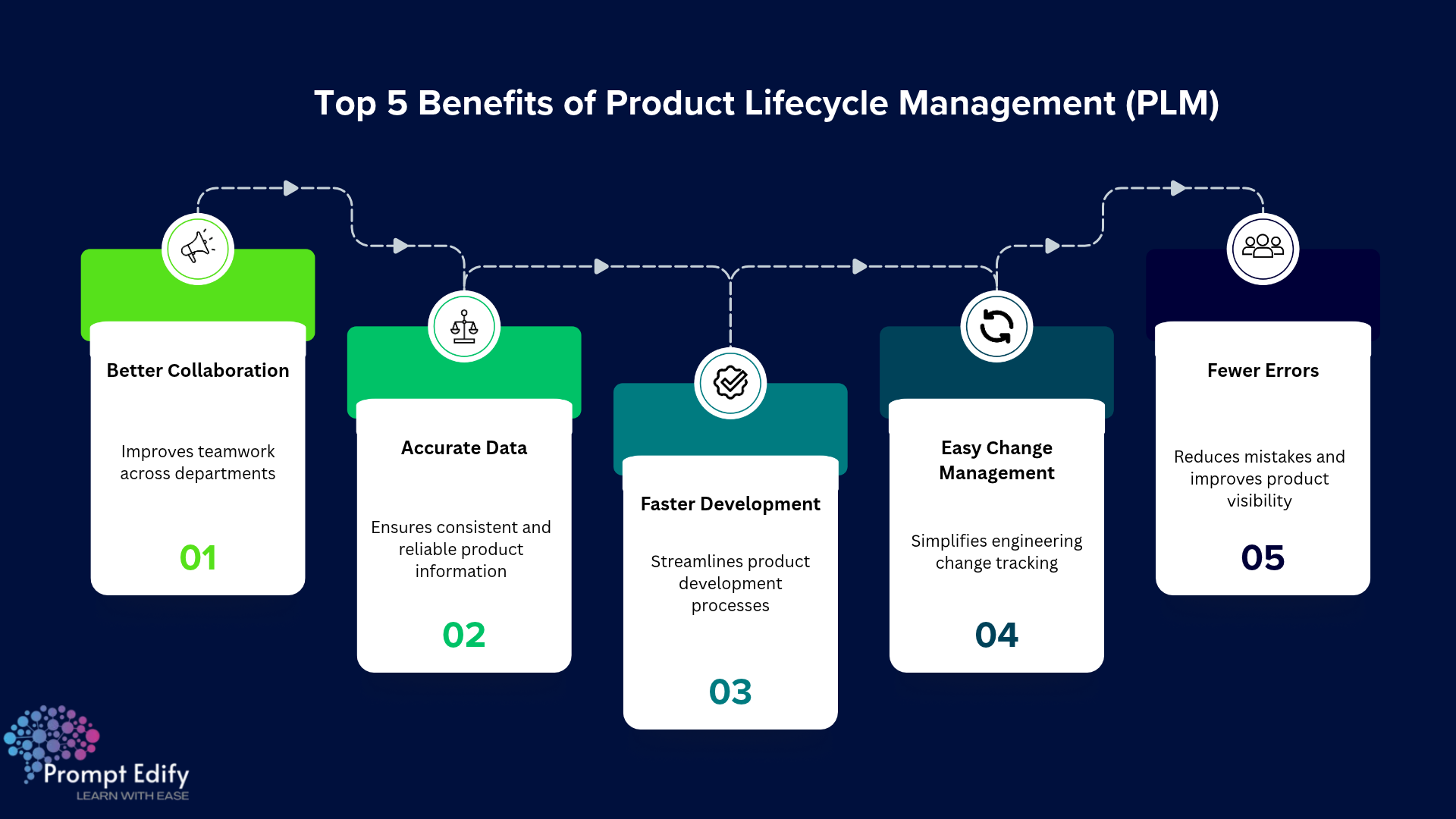
There are many benefits that Product Lifecycle Management can provide to companies experiencing challenges with product development.
Benefits that PLM can provide to companies can include:
Digital Product Lifecycle Management refers to the process of managing all information and processes associated with the product in a digital manner.
With this, companies can manage all their product data, engineering information, design information, and change information in a digital way.
It helps in managing all information, coordination of activities, and understanding the product changes in different lifecycle stages.
For manufacturing companies in today’s era, digital product lifecycle management is an important tool for information management and connectivity.
If professionals are interested in PLM, then they may consider taking SAP PLM training to get acquainted with the process of managing product information and development process via SAP systems.
In any training session, learners must be aware of various concepts such as product lifecycle management, product data management, BOM management, engineering change management, document management, and integration with other enterprise systems.
Besides, it is recommended that learners seek out examples of the application of these concepts in business practices.
Prior to selecting the training session, they should examine the training curriculum and other factors.
The SAP Product Lifecycle Management solution can be used by organizations for product information management and coordination of activities during all phases from conception and design to manufacturing and service and finally end of life of the product.
PLM solution facilitates collaboration, data accuracy, and product development through the integration of product data, engineering changes, documentation, and business processes.
Knowledge about SAP PLM acts as a base for understanding about the management of the digital product lifecycle of modern organizations.
Wish to know more about SAP PLM? Contact Prompt Edify to gain knowledge about SAP PLM training, course details, and learning advice.
By Team Prompt Edify
Have any enquiry? Call us
+(27) 740294414
(+91) 99932-86938
wecare@promptedify.com


Prompt Edify Africa (PTY) Limited
2nd Floor, Rivonia VillageCnr Mutual Road and Rivonia Boulevard Rivonia Village, 2191
Johannesburg , South Africa
Contact : +27740294414
Prompt Edify East Africa Limited
KN 78 ST, Kagarama, Kigali, Kigali, Nyarugenge, Umujyi wa Kigali, Rwanda
Contact : +250 727 845 771
Prompt Edify Private Limited
4th Floor #15, City Vista Tower, Fountain Road,
Kharadi, Pune(MH), India.
PIN- 411014
Contact : (+91) 99932 86938



Contact Us Today!
+27740294414 | (+91) 99932 86938 | +250 727 845 771
contact@promptedify.com | wecare@promptedify.com
🌐 https://promptedify.co.za/