
Explore SAP Plant Maintenance (SAP PM), including technical objects, notifications, work orders, preventive maintenance, and its role in equipment management.
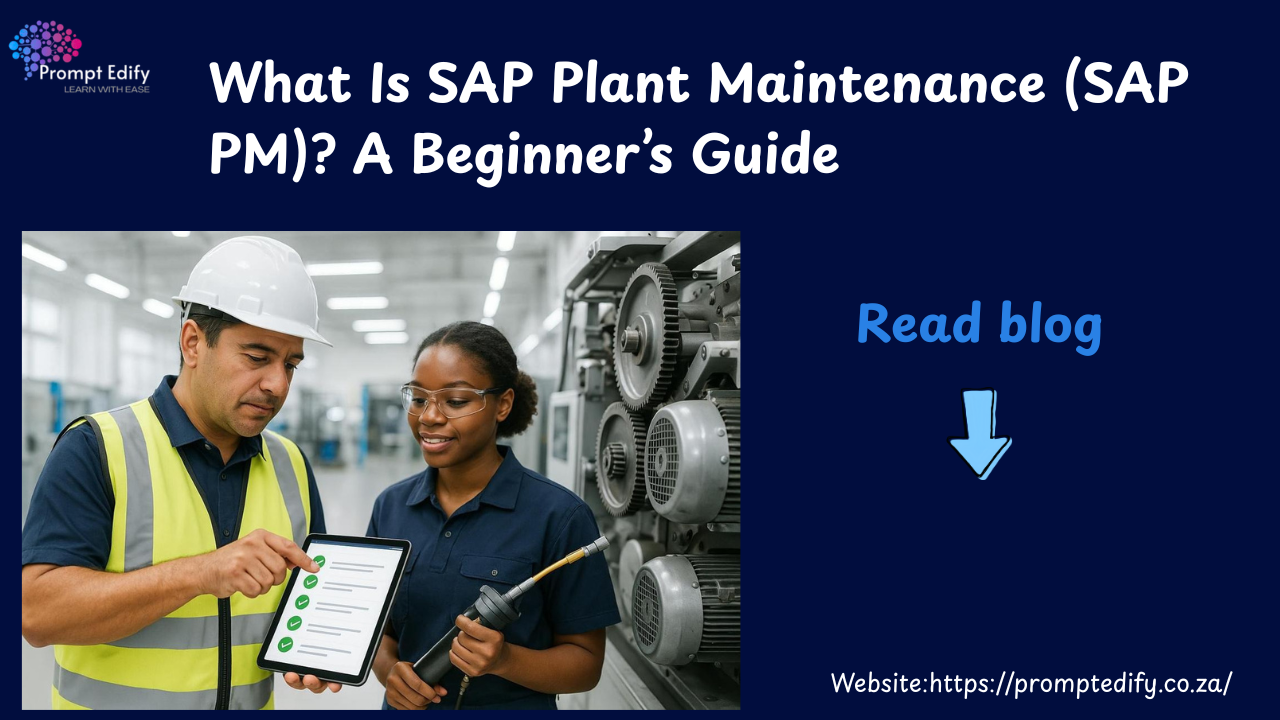
Every organisation that relies on machinery, production equipment, vehicles, or technical infrastructure needs a proper maintenance process to succeed. Any breakdown in equipment can halt production, incur repair costs, delay deliveries, and have repercussions on an organization’s performance. If equipment maintenance is not planned well, companies will have a hard time managing equipment failures.
This is when SAP PM comes into play. This software will enable organizations to handle maintenance operations, track technical devices, and plan repairs.
In order to successfully maintain equipment, organizations have to implement planning for both preventive maintenance and corrective maintenance. It also allows connecting maintenance with other processes of the company and thus organizing maintenance activity properly.
In this introductory guide, we are going to explain the notion of SAP Plant Maintenance, its function, main ideas, and its processes.
SAP Plant Maintenance (SAP PM) is a function of SAP ERP that makes it possible to plan, execute, and finalise maintenance processes for technical equipment.
It also enables maintenance personnel to keep tabs on equipment, maintenance notifications, work orders, maintenance plans, and repairs.
Since SAP PM was designed as a system for maintaining production equipment and machinery, it is essentially a tool that allows for efficient recording of equipment breakdowns, organisation of maintenance activities, management of resources, and historical data analysis.
In SAP S/4HANA, the functions of managing SAP PM have been incorporated into SAP S/4HANA Asset Management.
SAP Plant Maintenance aims to assist businesses in keeping their machinery and technical equipment in good working order.
SAP might help organisations implement maintenance using one connected tool instead of using independent spreadsheets and manual documentation to manage the maintenance process.
Some of the aims of SAP PM are:
This allows companies to manage maintenance processes more easily and ensure the availability of machinery for end users.
Mastering the basics of SAP PM lays the groundwork for novices to better understand the structure of work done in terms of maintenance.
Technical objects denote a location or a physical asset needing maintenance. The key technical objects include:
Equipment: This refers to isolated physical assets like machinery, pumps, motors, etc.
Functional Locations: This refers to locations that have some kind of equipment or are the locations where maintenance work takes place.
Both of these serve the purpose of tracking the assets and availability of technical information.
Notifications of maintenance are utilized to report issues such as problems regarding an item of equipment, technical observations, and the requirement for maintenance.
For instance, when a machine starts making strange sounds, a worker or an employee can send their report via notifications of maintenance. After that, the maintenance department will check the problem and decide what steps to make.
Orders of maintenance work organize the operations required to carry out the process of maintenance. They can contain information regarding the maintenance operation, required materials, work resources, time and place of execution.
Thus, maintenance orders allow maintenance teams to coordinate repair and maintenance operations.
Plans of maintenance facilitate the operation of repeated maintenance. Companies can use them in order to organize maintenance activities depending on either time intervals or equipment operation time.
For instance, a company may plan an inspection of a production machine every three months.
Maintenance activity rosters consist of standardized activities and procedures that can be utilized for future works of a similar nature.
They ensure that companies have uniform procedures for conducting maintenance work.
Maintenance activity rosters consist of standardized activities and procedures that can be utilized for future works of a similar nature.
They ensure that companies have uniform procedures for conducting maintenance work.
Breakdown maintenance is done when equipment ceases to work correctly or crashes and needs repair.
The maintenance personnel log the trouble, examine the equipment's condition, organize the repair tasks, and document what has already been done.
Maintenance planning is concerned with determining the work to be done, resources and input materials required for carrying out the maintenance activities.
Scheduling defines when the maintenance should be done and what the equipment availability rate and the operational needs for the equipment are.
Upon receiving approval for the maintenance schedule, technicians implement the necessary maintenance work. When maintenance work is completed, documentation may include details such as work done, resources used, and technical inspection summaries as applicable.
All this contributes to the lifetime history of the asset.
SAP Plant Maintenance is pivotal for organizations in managing their maintenance activities in a well-organized way.
The role of SAP PM goes beyond the mere repair of the equipment; it plays a role in harmonizing technical equipment, maintenance workforce, materials, and business processes.
With the help of SAP PM functionalities, businesses can:
SAP S/4HANA provides SAP Asset Management with features that enable the mentioned processes and their integration into the other processes of the company.
For instance, maintenance activities include planning spare parts to be acquired, preparing procurement processes for buying equipment, and gathering information from finance about costs related to maintenance management.
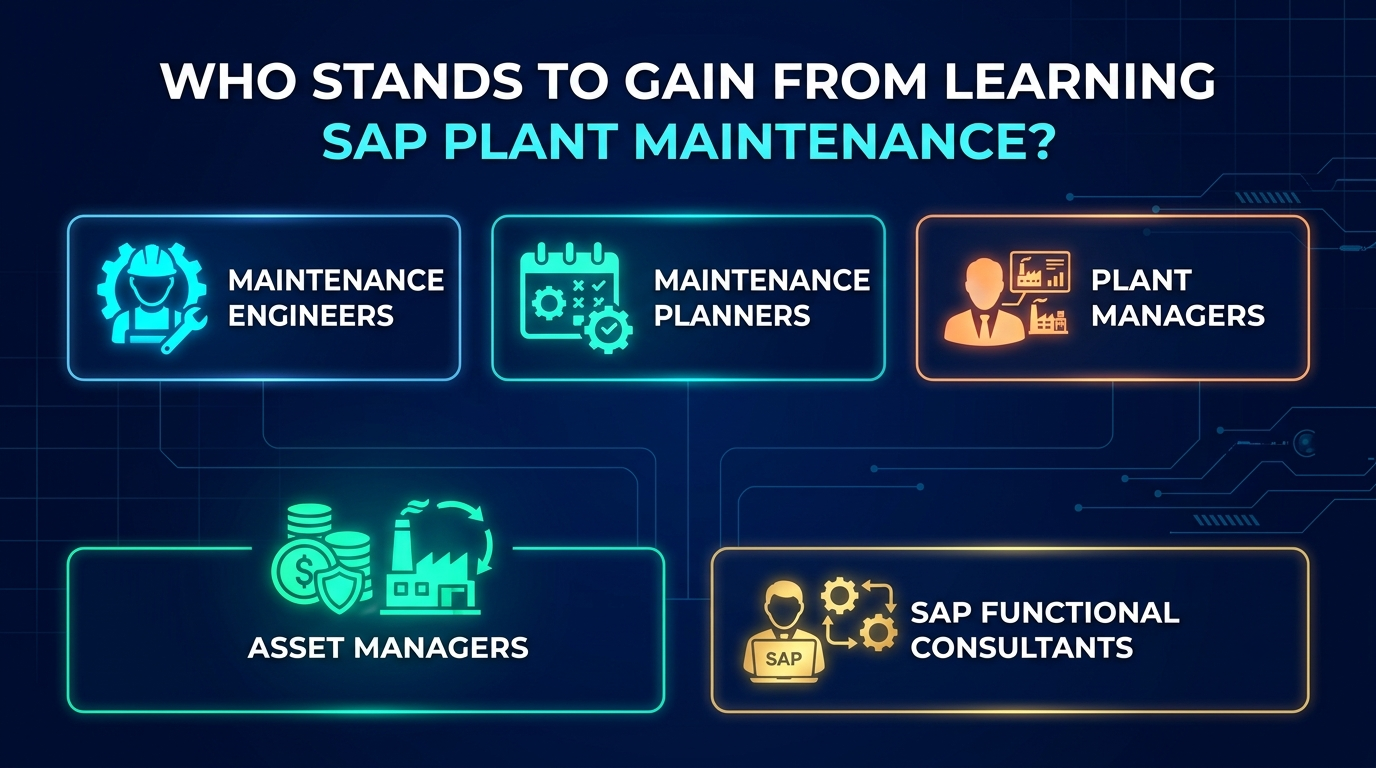
SAP PM expertise may be helpful to those engaged in maintenance of machines, production processes and asset management.
Some affiliated positions include:
The knowledge of SAP PM is an asset for the mentioned professionals, helping them cope with maintenance activities within the SAP system.
Through SAP Asset Management Training, learners will acquire knowledge related to the maintenance processes and concepts being used in SAP S/4HANA.
The structured training includes technical objects and maintenance requirements, which involve maintenance notifications and maintenance work orders, maintenance scheduling, preventive maintenance, corrective maintenance, and maintenance execution.
At Prompt Edify, we teach SAP students about important concepts of SAP maintenance system and its business processes.
The content of the course and practical system tasks may vary significantly depending on the course requirements and training situation.
This course can help people better understand how SAP is used in maintenance management of modern companies.
Through structured procedures for planning, notifications, work orders, preventive maintenance, and corrective maintenance, SAP Plant Maintenance (SAP PM) enables other businesses to manage the process of maintaining equipment efficiently.
By collecting information about technical objects, using maintenance resources, and keeping records of equipment history, SAP PM can facilitate the maintenance process in a better way
AS this functionality is integrated into the larger environment of SAP Asset Management in S4/HANA, it enables taking the maintenance processes of the organization to a new level.
For those who want to know how the maintenance processes work in business, SAP Asset Management training can show the basics of SAP maintenance techniques and processes.
By Team Prompt Edify
Have any enquiry? Call us
+(27) 740294414
(+91) 99932-86938
wecare@promptedify.com


Prompt Edify Africa (PTY) Limited
2nd Floor, Rivonia VillageCnr Mutual Road and Rivonia Boulevard Rivonia Village, 2191
Johannesburg , South Africa
Contact : +27740294414
Prompt Edify East Africa Limited
KN 78 ST, Kagarama, Kigali, Kigali, Nyarugenge, Umujyi wa Kigali, Rwanda
Contact : +250 727 845 771
Prompt Edify Private Limited
4th Floor #15, City Vista Tower, Fountain Road,
Kharadi, Pune(MH), India.
PIN- 411014
Contact : (+91) 99932 86938



Contact Us Today!
+27740294414 | (+91) 99932 86938 | +250 727 845 771
contact@promptedify.com | wecare@promptedify.com
🌐 https://promptedify.co.za/