
Explore how SAP PLM connects product development, engineering data, change control, and manufacturing to improve collaboration and manage product lifecycles.
A product does not usually go from conception to delivery in one direct path. Research is done, designs are created, materials are tested, suppliers are coordinated, changes occur, and the product is prepared for manufacture. Without an integrated system, one design modification can cause complications or errors. SAP R&D and Engineering Services assist businesses in linking their product development efforts with other processes in the organization.
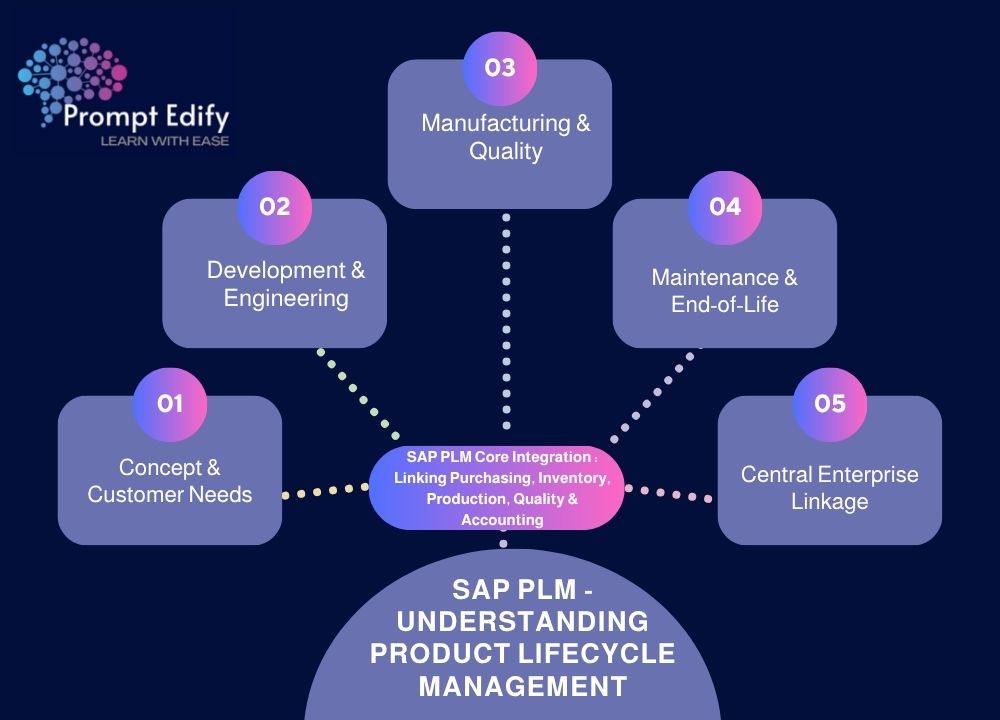
Product Lifecycle Management refers to the coordination and control of all information and processes that define the lifecycle of a product. This could start from the concept or customer needs and go all the way from development through manufacturing and maintenance up to the end of the product lifecycle.
SAP PLM helps in achieving this by aligning the product information with the corporate process. In addition to that, it allows organizations to link product information with purchasing, inventories, production planning, quality control and accounting.
Consider a scenario whereby a manufacturer makes changes to a product component after discovering that there was a problem with quality. The engineering team would update the drawing, while procurement would confirm that the right replacement material is available. Meanwhile, the production department will require updated instructions, and the quality team should know which revision to use. In case all these departments use independent tools, such as spreadsheets or emails, outdated data could still be in circulation.
There is a way to solve this challenge using the governed PLM strategy.
PLM can facilitate a number of interconnected phases such as:
• Concepts and requirements: Recording customer needs, product concepts, technical requirements, and early feasibility considerations.
• Design and engineering: Managing the structure of the product, its specifications and documentation as well as the revisions to enable collaboration based on updated information.
• Change management: Considering the change proposals, evaluating the effects of changes and recording approvals of the change proposals.
• Planning and manufacturing: Making use of approved product information to develop BOM, purchasing and manufacturing planning and testing according to interrelated SAP processes.
As there may be problems with testing and suppliers that will necessitate revising the design, PLM can assist with managing these cycles.
Ability to control the product information will assist the team in finding correct specs in a shorter period and less effort would be needed to determine the correct version.
Benefits are:
• Better collaboration: Engineering, Procurement, Manufacturing, and Quality work based on shared product information.
The result will depend on data quality, process standardisation, configuration, and user adoption.
Let’s assume that a company manufacturing industrial pumps changes a seal material in order to increase the efficiency of its operation. If there is no coordinated approach to handling such changes, then purchasing may purchase the old part, production will operate according to old instructions, and the service will not know which units have been changed.
Thanks to a well-coordinated PLM process, the change is described, evaluated, and approved with supporting information. All related parties evaluate the effect of the change on component availability, product structures, production instructions, and control.
Deployment of the Product Lifecycle Management concept is more complex than picking a good piece of software. Companies have to get ready with regard to personnel, business processes, and product information in order to make sure that the new solution will be helpful for performing day-to-day engineering and business tasks.
• Alignment of processes: Analyse the flow of product specifications, engineering documentation, change orders and approvals.
• Quality of the product data: Find duplicates, outdated documents, problems with naming standards, lack of links between related product items.
• Connections of the system: Understand how PLM should integrate with ERP, procurement, manufacturing, quality management, and engineering applications.
• Clear responsibilities: Allocate responsibility for maintenance of the product record, approvals of the engineering change orders, and conflict resolution.
• Controlled implementation: Start from introducing the system in a selected product line or business process, analyse the results, and implement further.
Before doing anything else, perform a fit-gap analysis in order to understand how well does SAP meet your needs and how much integration is needed.
SAP R&D and Engineering Services can provide organizations with assistance to understand the relationship of their product development activities with their enterprise-wide business processes. The assistance could be in the form of workflow analysis, identification of data and integration requirements, change management practices, and aligning the solution with business requirements without copying all existing processes into software.
It can assist emerging companies to manage their product portfolio and also established companies to enhance cooperation between their design and implementation.
SAP PLM is not just a repository for drawings; it helps align product information, change control and decision-making processes through the entire lifecycle of the product. With correct data, proper governance, appropriate integration and training, organizations can gain greater visibility and make product development easier to manage.
For those companies wishing to integrate their engineering decisions with operations, learn how the correct SAP solution can help through Prompt Edify.
Contact: +27 740 294 414 | +91 99932 86938
Email: contact@promptedify.com
Website: https://promptedify.co.za/
By Team Prompt Edify
Have any enquiry? Call us
+(27) 740294414
(+91) 99932-86938
wecare@promptedify.com


Prompt Edify Africa (PTY) Limited
2nd Floor, Rivonia VillageCnr Mutual Road and Rivonia Boulevard Rivonia Village, 2191
Johannesburg , South Africa
Contact : +27740294414
Prompt Edify East Africa Limited
KN 78 ST, Kagarama, Kigali, Kigali, Nyarugenge, Umujyi wa Kigali, Rwanda
Contact : +250 727 845 771
Prompt Edify Private Limited
4th Floor #15, City Vista Tower, Fountain Road,
Kharadi, Pune(MH), India.
PIN- 411014
Contact : (+91) 99932 86938



Contact Us Today!
+27740294414 | (+91) 99932 86938 | +250 727 845 771
contact@promptedify.com | wecare@promptedify.com
🌐 https://promptedify.co.za/