
SAP ECC to S/4HANA migration in Mali requires structured planning, data readiness, and the right deployment strategy. A well-executed transition ensures compliance, performance optimization, and long-term digital transformation success.
Digital transformation is quickly taking shape in Africa, prompting Malian organizations to reassess their enterprise systems to stay competitive, compliant, and prepared for future growth. Many businesses and public sector institutions are utilizing SAP ECC; however, because SAP’s roadmap has shifted toward S/4HANA, they must begin to prepare for a structured and strategic transition through SAP S/4HANA Migration.
Migrating to SAP S/4HANA is not simply an upgrade in terms of technology; it is a complete transformation of how the business operates. The goal of this article is to provide an outline of how to develop a practical planning, strategy, and execution plan when migrating from ECC to S/4HANA in Mali's rapidly growing economy, especially when considering a structured Legacy System Upgrade.
Organizations have relied on SAP ECC for many years for all aspects of business operations, including finance, procurement, HR, logistics, and overall supply chain management. The next generation of this platform is SAP S/4HANA, which offers the following benefits as part of an effective ECC to S/4HANA transition:
Real-time data, thanks to an in-memory computing architecture,
Data models that are simpler to use and maintain,
The FIORI user interface that enhances user experience,
Automated processes using Artificial Intelligence (AI),
Improvements in compliance and governance.
The need for upgrading to S/4HANA is especially important for organizations in Mali's mining, telecommunications, banking, and public sectors due to the increased complexity of operations and reporting that they must meet due to regulations and competitive pressures, making SAP S/4HANA Migration a strategic priority.
The transition from SAP ECC to SAP S/4HANA will allow these organizations to remain current with global ERP innovations while improving system performance and their ability to be more agile in conducting business through a well-defined SAP S/4HANA Migration Strategy.
Before implementing SAP S/4HANA as a new ERP system, organizations are required to perform an extensive assessment of their existing system. A thorough assessment will include analysis of the current ECC system landscape; evaluation of existing custom codes in ECC; review of existing business processes; readiness assessment of current infrastructure for migration; and lastly analysis of existing data quality as part of a structured SAP S/4HANA Migration Strategy.
All of these steps aid in developing an appropriate migration strategy for SAP S/4HANA that reflects the organization’s overall objectives, timelines, and budgets aligned with SAP S/4HANA Migration.
Main question:
Is the organization intending a technical upgrade of its existing ERP system or going through a business process transformation under an ECC to S/4HANA roadmap?
There are three main ways to migrate to SAP S/4HANA under a defined SAP S/4HANA Migration Strategy:
Many organizations in Mali are likely to choose THE HYBRID MIGRATION METHOD BECAUSE OF THE NATURE AND COMPLEXITY OF THE REGULATORY ENVIRONMENT while adopting a tailored SAP S/4HANA Migration Strategy.
Step 2: Data Migration & SAP S/4HANA Migration Cockpit
Moving data from ECC to S4/HANA is a huge step in the transition process. It’s vital that the SAP S/4HANA migration cockpit is used properly to make it easier to move legacy data into the new system as part of a successful SAP S/4HANA Migration.
Some of the key features of the SAP S/4HANA Migration Cockpit include:
The benefits of having clean and accurate data will guarantee the stability of the new system and the reporting will be accurate after migration during an ECC to S/4HANA initiative.
In Mali, attention must be paid to the following types of data:
If data migration is not managed properly, it will delay the entire project and increase the operational risks associated with it during SAP S/4HANA Migration.
Long-standing unique developments were developed during the duration of the ERP application in ECC. During the planning process to migrate away from ECC to S/4HANA as part of a Legacy System Upgrade:
With the introduction of S/4HANA's simplified table structures and embedded analytics, many custom reports that have been created can no longer be utilized in S/4HANA. The main goal is to ensure that the migration process becomes a transformative process and not simply a technical upgrade within an ECC to S/4HANA journey.
Malian organisations have three options for their deployment model: on-premise, private cloud, or public. The choice to adopt a cloud solution can be driven by cost, reduced capital expenditure on hardware, scalability, and improved disaster recovery, especially when considering SAP On-Premise to Cloud Migration.
Some public sector organisations and financial institutions may prefer on-premise systems to meet their regulatory/compliance requirements within a broader SAP S/4HANA Migration Strategy.
Infrastructure planning is required to ensure:
Appropriate planning before go-live can help reduce the time the organisation is unable to perform its ordinary functions during SAP S/4HANA Migration.
SAP S/4HANA migration includes several required testing phases as part of a structured SAP S/4HANA Migration.
There are four different testing phases.
Once testing has been completed successfully through these various phases, the organization will look forward to the cutover planning phase under a defined SAP S/4HANA Migration Strategy. This cutover plan will identify:
A well-planned go-live will help minimize disruptions to everyday business operations during ECC to S/4HANA transitions.
Migration does not end at go-live. Continuous monitoring and optimization are essential for long-term success in SAP S/4HANA Migration.
Post-migration support includes:
Organizations should also explore advanced features like:
These capabilities provide long-term ROI and competitive advantage through a strong SAP S/4HANA Migration Strategy.
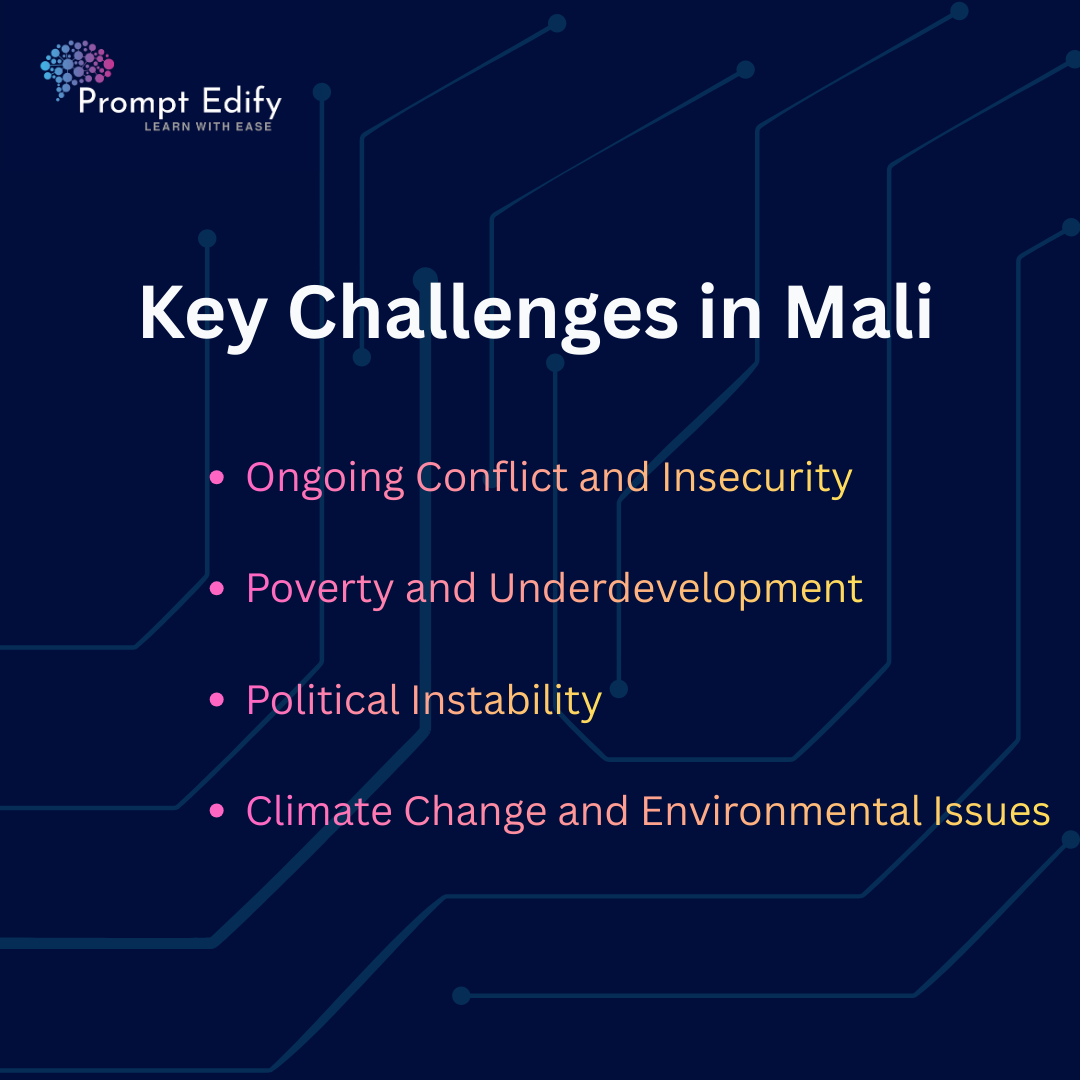
While the benefits are significant, organizations may face challenges such as limited local SAP expertise, infrastructure limitations, change management resistance, and budget constraints during SAP S/4HANA Migration.
Working with experienced SAP implementation partners ensures smooth execution and reduced risk when planning an effective Legacy System Upgrade.
SAP ECC support timelines are approaching end-of-maintenance milestones globally, making early ECC to S/4HANA preparation essential.
Delaying migration can result in increased maintenance costs, compliance risks, security vulnerabilities, and competitive disadvantage without a defined SAP S/4HANA Migration Strategy.
A structured SAP S/4HANA Migration Strategy ensures organizations in Mali transition smoothly while maximizing value from their ERP investment through professional SAP S/4H4ANA Migration.
Transitioning from ECC to S/4HANA is not simply an upgrade to a new system, but instead, an effort that changes how business operates. Organizations in Mali will be able to experience operational excellence and digital resilience when they focus on their overall strategy by planning ahead of time for data migration with the SAP S/4HANA migration cockpit, selecting a suitable approach for migration, and providing post-go-live support through SAP S/4HANA Migration.
If you are currently thinking of doing either a technical Upgrade of your Old Systems or undergoing a total enterprise-wide transformation, then now is the time to proceed.
By Team Prompt Edify
Have any enquiry? Call us
+(27) 740294414
(+91) 99932-86938
wecare@promptedify.com


Prompt Edify Africa (PTY) Limited
2nd Floor, Rivonia VillageCnr Mutual Road and Rivonia Boulevard Rivonia Village, 2191
Johannesburg , South Africa
Contact : +27740294414
Prompt Edify East Africa Limited
KN 78 ST, Kagarama, Kigali, Kigali, Nyarugenge, Umujyi wa Kigali, Rwanda
Contact : +250 727 845 771
Prompt Edify Private Limited
4th Floor #15, City Vista Tower, Fountain Road,
Kharadi, Pune(MH), India.
PIN- 411014
Contact : (+91) 99932 86938



Contact Us Today!
+27740294414 | (+91) 99932 86938 | +250 727 845 771
contact@promptedify.com | wecare@promptedify.com
🌐 https://promptedify.co.za/