
Businesses in Gaborone are adopting SAP S/4HANA Cloud to modernize operations and improve decision-making with real-time data. Learn how SAP S/4HANA Migration, ECC to S/4HANA transition, and cloud ERP strategies drive digital transformation in Botswana.

As competition grows and operational efficiencies are emphasized, companies in Gaborone are increasingly adopting digital transformations. The biggest change impacting Botswana's technology sector has been the movement towards cloud-based ERP systems, specifically, SAP S/4HANA Cloud, resulting in SAP S/4HANA Migration by companies such as mining, banking, manufacturing, and logistics to modernise their enterprise operations.
This represents much more than an upgrade; it is a strategic initiative that enables organisations to scale more effectively, access real-time information, and remain competitive in a fast-changing business environment. Learn more about modernization through SAP On-Premise to Cloud Migration.
The capital city of Botswana, Gaborone, has a burgeoning business environment with many companies investing in advanced digital infrastructure. Much of this investment is due to many companies using older ERP systems like SAP ECC that have now reached end-of-life status. As a result, the end of support for SAP ECC in 2027 is driving many companies worldwide to transition to more modern ERP platforms, such as SAP S/4HANA.
For companies in Botswana, this means they will need to plan for an ECC-to-S/4HANA transition sooner rather than later to prevent operational disruption and ensure long-term technology stability. Organizations also consider a Legacy System Upgrade to remain technologically competitive.
Today's organisations use information to guide their everyday activities; therefore, the ability to use data to drive business decisions has become increasingly important for organisations that rely on the SAP S/4HANA Cloud solution.
The ability of the SAP HANA database's capacity to execute large volumes of transactions and analyse large amounts of information in "real-time" enables organisations to:
This immediacy allows company executives and managers to make rapid and accurate strategic business decisions while implementing SAP S/4HANA Migration initiatives. Many companies also align these initiatives with SAP On-Premise to Cloud Migration strategies.
Historically, large-scale companies have relied on traditional (on-premise) ERP systems, which have ongoing maintenance requirements and extensive hardware acquisition costs, as well as dedicated IT personnel to manage and maintain this equipment. Cloud ERP solutions enable organisations to significantly reduce the infrastructure cost associated with using an ERP system.
For example, cloud-based ERP solutions provide:
This creates a more cost-effective approach to Legacy System Upgrade and promotes easier management for organisations operating in Botswana. Many organizations begin this journey through SAP On-Premise to Cloud Migration.
Botswana's expansion into the Southern African region is creating new opportunities for many businesses in Botswana. Cloud ERP (enterprise resource planning) solutions offer the scalability to support this growth.
Utilizing SAP S/4HANA Cloud allows organizations to:
Cloud ERP solutions also allow users of the service to scale the number of resources required up or down on-demand, making them ideally suited for growing businesses transitioning from ECC to S/4HANA systems. These transformations are often guided by a structured SAP S/4HANA Migration Strategy.
Many legacy ERP implementations lack effective integration and have multiple databases that do not communicate with one another. SAP S/4HANA Cloud offers integrated modules for finance, procurement/supply chain, and human resources.
For example, a Botswana-based mining company can use one platform to integrate the following processes: procurement, inventory management, and financial reporting.
Integrating data through a common platform will allow an organization to:
Organizations achieve this integration through SAP S/4HANA Migration and modern SAP On-Premise to Cloud Migration approaches.
Careful planning is essential when migrating to SAP S/4HANA Cloud. Using a clearly defined SAP S/4HANA Migration Strategy will ensure minimal system downtime while providing a seamless transition from an existing legacy system. Many companies implement this alongside SAP On-Premise to Cloud Migration initiatives.
Typically, there are three primary approaches for migration:
The migration strategy to choose will depend on the complexity of your systems, the structure of your data, and your business objectives.
The use of advanced tools in current SAP migration projects has simplified migrations.
The SAP S/4HANA migration cockpit is one of the most popular tools used to transfer data from legacy systems to a new ERP system. Many organizations adopt this alongside SAP S/4HANA Migration services.
With this tool, companies can:
By using automated migration tools, you can speed up your SAP S/4HANA migration project while reducing the time to implement your system.
In Botswana, there are a number of industries that have started investing in cloud-based ERP systems.
All these industries will gain substantial advantages from the productivity and cost efficiency associated with using SAP S/4HANA Migration solutions and strategic SAP S/4HANA Migration Strategy planning.
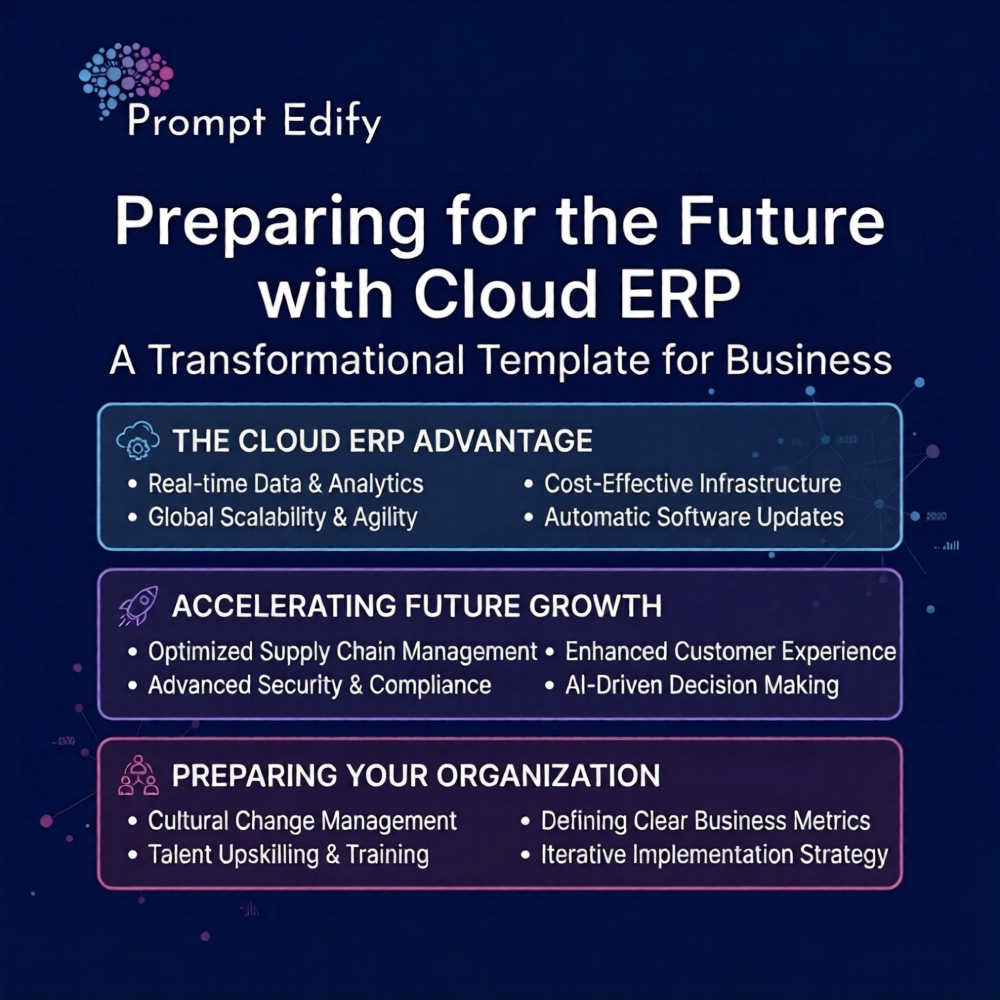
Cloud ERP systems will help businesses in Botswana build a digital platform that will allow them to innovate and grow long-term, rather than simply replacing existing systems. Customers in Botswana are preparing for the future by implementing SAP On-Premise to Cloud Migration and Legacy System Upgrade initiatives now. By upgrading their legacy systems today, they will be able to compete more effectively within the digital economy tomorrow.
The move towards Cloud ERP in Gaborone is a major change for businesses in Botswana. As the date for the end of support for current (or legacy) ERPs nears, organisations are moving from ECC to S/4HANA and putting money into Cloud-based solutions, which offer them a path to scalability.
With a comprehensive SAP S/4HANA Migration Strategy — along with SAP S/4HANA migration cockpit tools — companies can effectively modernise their ERP systems and create new opportunities for increased operational efficiency.
By implementing SAP S/4HANA Cloud, companies in Botswana can obtain real-time data, reduce their costs of operation, and have the flexibility to compete in an increasingly digital world.
By Team Prompt Edify
Have any enquiry? Call us
+(27) 740294414
(+91) 99932-86938
wecare@promptedify.com


Prompt Edify Africa (PTY) Limited
2nd Floor, Rivonia VillageCnr Mutual Road and Rivonia Boulevard Rivonia Village, 2191
Johannesburg , South Africa
Contact : +27740294414
Prompt Edify East Africa Limited
KN 78 ST, Kagarama, Kigali, Kigali, Nyarugenge, Umujyi wa Kigali, Rwanda
Contact : +250 727 845 771
Prompt Edify Private Limited
4th Floor #15, City Vista Tower, Fountain Road,
Kharadi, Pune(MH), India.
PIN- 411014
Contact : (+91) 99932 86938



Contact Us Today!
+27740294414 | (+91) 99932 86938 | +250 727 845 771
contact@promptedify.com | wecare@promptedify.com
🌐 https://promptedify.co.za/