
Malawi businesses must prepare for the SAP ECC support deadline by planning their SAP S/4HANA migration early. Upgrading to S/4HANA enables real-time insights, automation, and future-ready digital business operations.
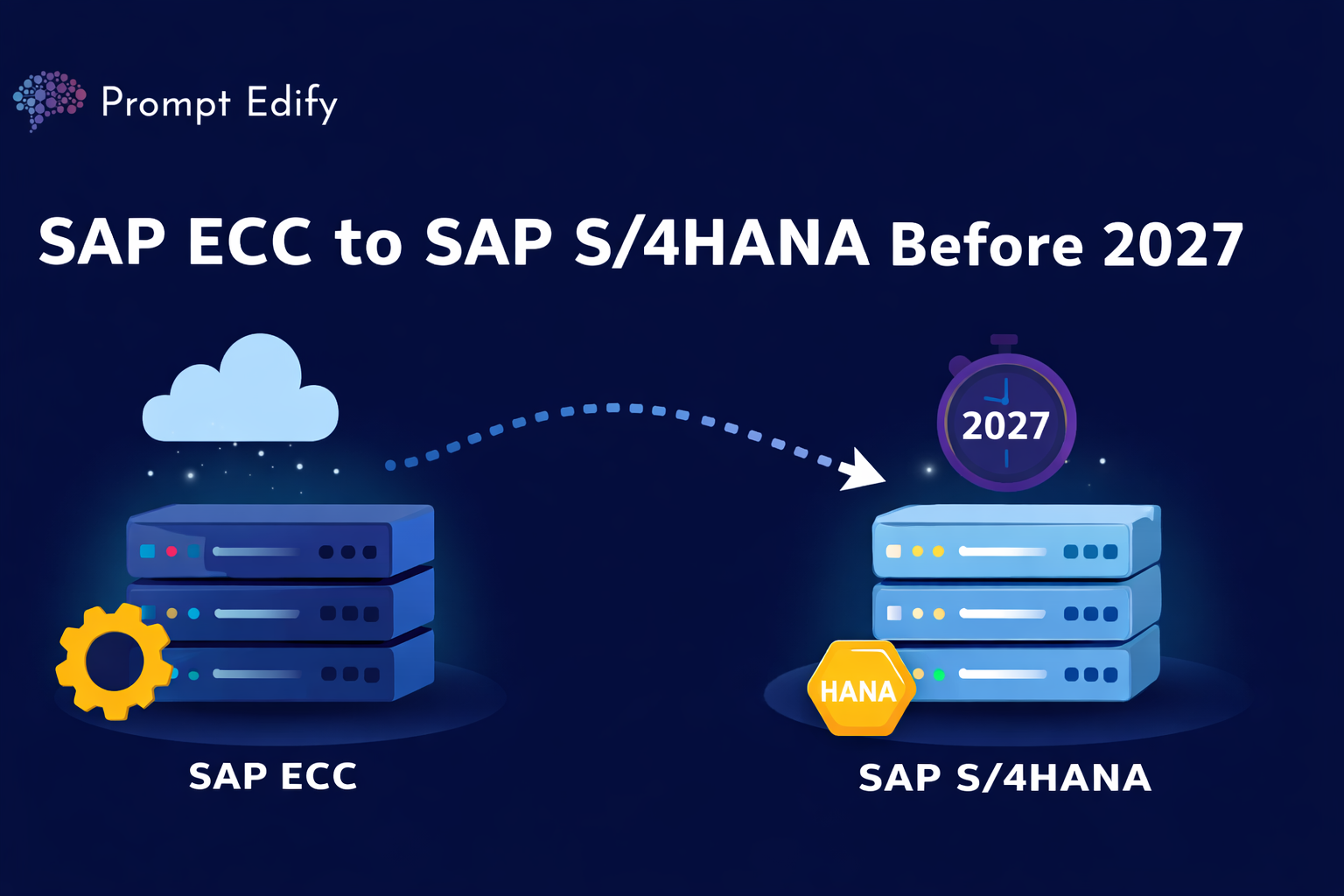
Digital transformation is reshaping the way organizations do business in Africa. For example, as organizations in Malawi adopt advanced enterprise technologies, they will become more competitive, increase their efficiency, and support long-term growth. Currently, many organizations continue to use out-of-date ERP platforms like SAP ECC; with the end of mainstream support fast approaching, organizations must begin planning their migration to SAP S/4HANA Migration prior to 2027.
The migration from ECC to S/4HANA should not be considered a simple technology upgrade; it should be regarded as an overall strategic business transformation enabling an organization to take advantage of modernized processes, benefit from real-time data analytics, and prepare for the future of digital innovations. Implementing a modern ERP system can provide substantial operational agility and enhanced decision-making.
SAP ECC has long served as an enterprise operations platform to support the delivery of goods and services to customers. The solution has provided companies with the essential tools they need to manage their Financials, Supply Chain, HR, and Procurement processes as part of a Legacy System Upgrade journey.
With the recent announcement by SAP of the discontinuation of support for older versions of the ECC platform (i.e., 6.0 or earlier), organizations will have to evaluate whether or not they should consider upgrading to a new legacy system to provide for business continuity and security while preparing a SAP S/4HANA Migration Strategy.
Businesses that continue using outdated systems will increase their operational risk due to increased inefficiencies in their systems, greater exposure to cyberattacks and other security threats, and decreased compatibility to integrate with new technologies that have been developed, which is why SAP On-Premise to Cloud Migration is becoming essential.
If your company is located within one of Malawi’s shrinking economies, no doubt using legacy applications will hinder your ability to innovate and be competitive, making a Legacy System Upgrade critical.
The transition from ECC to S/4HANA allows companies to remain in alignment with current technological standards for enterprise resource planning (ERP) solutions being implemented around the world.
Next-generation Enterprise Resource Planning (ERP) software from SAP: S/4HANA is an extremely powerful ERP solution that runs on the SAP HANA in-memory (IM) database, as opposed to older and often more expensive transactional disk-based systems currently found in many businesses. S/4HANA can handle very high volumes of data in real-time; therefore, businesses today can combine this capability with other technologies (e.g. robotics) to gain immediate insights, automate tasks, and optimize work across functions/departments. Examples of how S/4HANA is already contributing to increased productivity include: financial reporting through real-time access to financial data; supply chain managers being able to access inventory-based data immediately; and/or business leaders making faster, better, more data-driven decisions, etc., which is why organizations are accelerating SAP S/4HANA Migration.
The successful migration of your company's systems to SAP S/4HANA will position your business to modernize its technology infrastructure and enhance overall operating efficiencies, while providing a foundation for future growth and scalability through SAP On-Premise to Cloud Migration.
A major benefit of switching to S/4HANA is the ability to analyze data in real time, aiding businesses in forecasting improvements, supply chain optimization, and greater financial transparency through SAP S/4HANA Migration.
The automation of processes and easy-to-use data models helps to decrease manual work and errors, allowing organizations to improve their workflows and increase productivity across multiple departments during a Legacy System Upgrade.
S/4HANA integrates easily with many of today’s leading technologies, including analytics tools, cloud-based applications, and AI-based solutions, giving businesses a more intelligent digital ecosystem supported by SAP On-Premise to Cloud Migration.
The modern user interface and enhanced usability of the S/4HANA system make it much easier for employees to use the system, allowing for quicker user acceptance, resulting in improved employee productivity during the ECC to S/4HANA transformation.
Organizations that migrate from ECC to S/4HANA will be well prepared for adopting future innovations such as advanced analytics, machine learning, and automation with a strong SAP S/4HANA Migration Strategy.
S/4HANA migration can be done with a solid road map made from detailed planning. Each organization has its own processes, systems, and data structures; therefore, each organization must determine its own migration approach based on its own business requirements and an effective SAP S/4HANA Migration Strategy.
An effective SAP S/4HANA Migration Strategy usually includes the following five key steps that support SAP S/4HANA Migration.
Review the existing ERP Environment and assess the amount of customization already completed while determining the level of readiness for the organization to perform the migration based on ECC to S/4HANA assessment results.
There are several different choices that companies can select from for migration based on the specific requirements of their organization: (i) System Conversion; (ii) Landscape Transformation; or (iii) New Implementation within a SAP S/4HANA Migration Strategy.
Cleaning and optimizing the data will result in better performance and prevent the organization from moving a large amount of legacy data that is not needed during SAP S/4HANA Migration.
Conducting complete testing of the new system prior to going live will help ensure the successful operation of the new system without any negative impacts on the normal operation of the organization during the SAP On-Premise to Cloud Migration.
Training employees on the new system will help with ensuring a smooth transition and maximize the return-on-investment of the new platform during a Legacy System Upgrade.
The SAP S/4HANA migration cockpit is among the essential resources that enable businesses to complete a variety of data migration tasks as part of the overall SAP S/4HANA Data Migration process.
The simplicity of the tool makes it very easy for users to migrate their data to the new S/4HANA System; the migration cockpit includes a wide variety of pre-built data migration templates along with automated data mapping capabilities provided by the SAP S/4HANA migration cockpit.
The 2027 deadline for SAP migration is still some time away, but owing to the complexity of the SAP migration project, you will need many months of careful planning and execution before the deadline to complete your SAP S/4HANA Migration.
If you delay until the last moment to migrate your SAP solutions, you may have issues with resource availability, increased cost of the project, and operational risk during ECC to S/4HANA.
By beginning your SAP S/4HANA migration project earlier, your business will have time to take advantage of better planning, smoother implementation, and a stronger competitive advantage through a strong SAP S/4HANA Migration Strategy.
If you are a business in Malawi that wants to expand regionally or globally, then upgrading your ERP solution is an essential first step towards becoming a modern digital business through SAP On-Premise to Cloud Migration.

Moving from SAP to another platform requires extensive technical expertise and an understanding of the industry. With experience comes the ability to perform SAP S/4HANA Migration smoothly, securely, and efficiently.
Expert consultants can assist firms with planning and executing an SAP S/4HANA Migration Strategy and implementing SAP S/4HANA tools like the SAP S/4HANA migration cockpit to minimize risk and maximize return on investment.
Organizations should choose the best implementation partner in order to convert their old ERP systems into cutting-edge digital platforms that encourage innovation and growth through a Legacy System Upgrade.
Companies that want to be progressive must move from SAP ECC to SAP S/4HANA - and it is now imperative that companies take action quickly to modernize their ERP systems as we move closer to the January 2027 deadline from ECC to S/4HANA.
By upgrading from outdated legacy systems, businesses in Malawi will gain access to new opportunities for improving efficiency, conducting innovative digital activities, and developing for continued growth in the long term through SAP S/4HANA Migration.
By Team Prompt Edify
Have any enquiry? Call us
+(27) 740294414
(+91) 99932-86938
wecare@promptedify.com

Prompt Edify Africa (PTY) Limited
2nd Floor, Rivonia VillageCnr Mutual Road and Rivonia Boulevard Rivonia Village, 2191
Johannesburg , South Africa
Contact : +27740294414
Prompt Edify East Africa Limited
KN 78 ST, Kagarama, Kigali, Kigali, Nyarugenge, Umujyi wa Kigali, Rwanda
Contact : +250 727 845 771
Prompt Edify Private Limited
4th Floor #15, City Vista Tower, Fountain Road,
Kharadi, Pune(MH), India.
PIN- 411014
Contact : (+91) 99932 86938



Contact Us Today!
+27740294414 | (+91) 99932 86938 | +250 727 845 771
contact@promptedify.com | wecare@promptedify.com
🌐 https://promptedify.co.za/